|
|
|
|
|
|

|
Naval History by Country :
|
|||||||||||||
| VIEW ALL OF OUR CURRENT ART SPECIAL OFFERS ON ONE PAGE HERE | |||
| NAVAL ART | AVIATION ART | MILITARY ART | SPORT ART |
|
|
John Ellecombe |
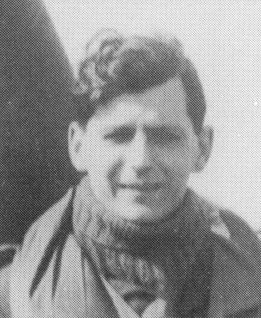 John Ellacombe Name : John Ellecombe Died : 11th May 2014 Awards : Distinguished Flying Cross Distinguished Flying Cross with 1 Bar |
John Ellecombe joined the RAF in 1939 and was posted to 151 Squadron in July 1940, immediately converting to Hurricanes. On 24th August he shot down a He111, but a week later his Hurricane was blown up in combat and he baled out, with burns. Rejoining his squadron a few months later, in February 1941 was posted to 253 Squadron where he took part in the Dieppe operations. On 28th July, flying a Turbinlite Havoc, he probably destroyed a Do217. Converting to Mosquitos, John was posted to 487 Squadron RNZAF, and during the build up to the Normandy Invasion and after, was involved in many ground attacks on enemy held airfields, railways, and other targets of opportunity. He completed a total of 37 sorties on Mosquitos. Flying a de Havilland Mosquito XIII with a devastating set of four 20mm cannon in the nose, John Ellacombe flew deep into occupied France on the night before D-Day searching out and destroying German convoys and railway targets. As the Normandy campaign raged on, 151 Squadron intensified its interdiction sorties - including night attacks on Falaise and the Seine bridges. On August 1st Ellacombe took part in the famous attack by 23 Mosquitoes on the German bar-racks in Poitiers, led by Group Captain Wykeham Barnes. Ellacombe had first joined 151 Squadron during the Battle of Britain, direct from Flying Training School. Within weeks he had scored his first victory but also force landed in a field, having shot down a He 111, and baled out of a blazing Hurricane. He baled out a second time during the Dieppe Raid in 1942 but was picked up safely. Postwar he had a long and successful career in the RAE. |
Known Service Details : | |||||||
Squadron | Rank | Start of Service | End of Service | Known Dates | Aircraft | Airframes | Notes |
Pilot Officer | July 1940 | unknown | 31st August 1940 | ||||
unknown | unknown | ||||||
unknown | unknown | ||||||
Artwork signed by this Pilot or Aircrew |
  Tribute to Flt Lt Ian R Gleed by Ivan Berryman. |   Tribute to Flying Officer Count Manfred Beckett Czernin by Ivan Berryman. |   Clipped Signature - John Ellacombe. |
  Those Valiant Few by Robert Taylor. |   Defence of the Capital by Gerald Coulson. (B) |   Into the Fray by Richard Taylor. (AP) |
  Holding the Line - The Battle of Britain by Nicolas Trudgian. |   Normandy Breakout by Nicolas Trudgian. |   Glorious Summer by Robert Taylor. (B) |
  Bitter Engagement by Robert Taylor. |   The Struggle for Malta by Ivan Berryman. |   Home Again by Ivan Berryman. (APB) |
  Normandy Veterans Association 60th Anniversary Limited Edition Print by Michael Turner. |   Mosquitos at Dusk by Nicolas Trudgian. |
Artwork with companion print(s) signed by this Pilot or Aircrew |
  Undaunted by Odds by Robert Taylor. (C) |
Photos Submitted Through Our Directory |
 John Ellacombe |
Known Individual Aircraft : | ||||||||
Type | Serial | Codes | First Flew | Squadron History | Aircrew History | History Notes | Engine | Factory |
- | ||||||||
| Aircraft for : John Ellecombe | ||
| A list of all aircraft associated with John Ellecombe. A profile page including a list of all art prints for the aircraft is available by clicking the aircraft name. | ||
| Aircraft | Info | |
Havoc 
Manufacturer : Douglas | Havoc A-20 | |
Hurricane 
Manufacturer : Hawker Production Began : 1936 Number Built : 14533 | Hurricane Royal Air Force Fighter, the Hawker Hurricane had a top speed of 320mph, at 18,200 feet and 340mph at 17,500, ceiling of 34,200 and a range of 935 miles. The Hurricane was armed with eight fixed wing mounted .303 browning machine guns in the Mark I and twelve .303 browning's in the MKIIB in the Hurricane MKIIC it had four 20mm cannon. All time classic fighter the Hurricane was designed in 1933-1934, the first prototype flew in June 1936 and a contract for 600 for the Royal Air Force was placed. The first production model flew ion the 12th October 1937 and 111 squadron of the Royal Air Force received the first Hurricanes in January 1938. By the outbreak of World war two the Royal Air Force had 18 operational squadrons of Hurricanes. During the Battle of Britain a total of 1715 Hurricanes took part, (which was more than the rest of the aircraft of the Royal air force put together) and almost 75% of the Victories during the Battle of Britain went to hurricane pilots. The Hawker Hurricane was used in all theatres during World war two, and in many roles. in total 14,533 Hurricanes were built. | |
Mosquito 
Manufacturer : De Havilland Production Began : 1940 Retired : 1955 Number Built : 7781 | Mosquito Used as a night fighter, fighter bomber, bomber and Photo-reconnaissance, with a crew of two, Maximum speed was 425 mph, at 30,300 feet, 380mph at 17,000ft. and a ceiling of 36,000feet, maximum range 3,500 miles. the Mosquito was armed with four 20mm Hospano cannon in belly and four .303 inch browning machine guns in nose. Coastal strike aircraft had eight 3-inch Rockets under the wings, and one 57mm shell gun in belly. The Mossie at it was known made its first flight on 25th November 1940, and the mosquito made its first operational flight for the Royal Air Force as a reconnaissance unit based at Benson. In early 1942, a modified version (mark II) operated as a night fighter with 157 and 23 squadron's. In April 1943 the first De Haviland Mosquito saw service in the Far east and in 1944 The Mosquito was used at Coastal Command in its strike wings. Bomber Commands offensive against Germany saw many Mosquitos, used as photo Reconnaissance aircraft, Fighter Escorts, and Path Finders. The Mosquito stayed in service with the Royal Air Force until 1955. and a total of 7781 mosquito's were built. | |
| Squadrons for : John Ellecombe | ||
| A list of all squadrons known to have been served with by John Ellecombe. A profile page is available by clicking the squadron name. | ||
| Squadron | Info | |
No.151 Sqn RAF Country : UK Founded : 12th June 1918 Fate : Disbanded September 1992 Foy pour devoir - Fidelity unto duty | No.151 Sqn RAF Full profile not yet available. | |
No.253 Sqn RAF Country : UK Founded : 7th June 1918 Fate : Disbanded 1st September 1957 Hyderabad State Come one, come all | No.253 Sqn RAF 253 Squadron was formed at Bembridge, on the Isle of Wight, on 7 June 1918, During the squadrons stay at Bembridge it parented No. 412 (Seaplane) Flight RAF and No. 413 (Seaplane) Flight RAF, as well as No. 511 (Special Duty) Flight RAF, No. 512 (Special Duty) Flight RAF and No. 513 (Special Duty) Flight RAF for coastal reconnaissance and anti-submarine patrols, flying Short Type 184 and Airco DH.6 aircraft. DH.6s of 511 and 512 Flights flew their aircraft from the aerodrome at Foreland 253 sqd was disbanded on 31 May 1919. On 30 October 1939, No 253 Squadron reformed at Manston and was originally intended as a shipping protection unit with Blenheims. None were delivered, however, and the squadron began to receive Hurricanes in February 1940, becoming operational on 3 April. In May 1940 one flight was sent to France to reinforce the hard-pressed Hurricane squadrons while the second flight flew daily to French airfields from 17 to 23 May. After re-equipping in Lincolnshire, No 253 took part in the Battle of Britain from the end of August and remained in southern England until January 1941. In February the squadron moved to the Orkneys for air defence duties, returning to England in September for convoy patrols off the East Coast. After taking part in the Dieppe raid, No.253 became non-operational in preparation for the invasion of North Africa and arrived in Algeria a few days after the landings. It provided air cover for the Army and its supply lines during the Tunisian campaign and its aftermath, moving to Italy in October 1943. In February 1944, the squadron arrived in Corsica to undertake escort and anti-shipping missions, returning to Italy in April for similar duties over Yugoslvia. In April 1945 the squadron actually moved to a base at Zadar that had been captured by the Yugoslav partisans during the German retreat from the country. After the end of the war the squadron quickly returned to Italy, spending the next year at Treviso. the squadron acquired a flight of Spitfire XIs from No.225 Squadron and disbanded on 16 May 1947. It moved to Austria during the winter of 1946-47 before returning to Treviso, where it was disbanded on 16 May 1947. On 18 April 1955, No 253 reformed at Waterbeach as a night fighter squadron with Venoms which it flew until disbanded on 1 September 1957. The Squadron operated the following aircraft December 1939-May 1940: Fairey Battle I February 1940-August 1941: Hawker Hurricane I, July 1941-September 1942: Hawker Hurricane IIA and IIB ' January 1942-September 1943: Hawker Hurricane IIC, March 1943: Supermarine Spitfire VC , August 1943-November 1944: Supermarine Spitfire VC , September 1943-June 1944: Supermarine Spitfire IX , November 1944-May 1947: Supermarine Spitfire VIII and IX March-May 1947: Supermarine Spitfire XI April 1955 Venom Jet Fighters | |
No.487 Sqn RNZAF Country : New Zealand Founded : 15th August 1942 Fate : Disbanded 19th September 1945 Ki te mutunga - Through to the end
| No.487 Sqn RNZAF 487 squadron was formed at Feltwell, Norfolk, 15th August 1942, equipped with Lockheed Ventura aircraft, commencing operations on 6th December. 487 contributed 16 aircraft to the famous low-level raid on the Phillips radio and valve factory at Eindhoven, and continued in the daylight role with Venturas until June 1943. On one operation during this period, the squadron suffered heavy losses. On May 3rd during a raid on Amsterdam, ten out of 11 aircraft were shot down. After the war when the full account of the raid became known, the B Flight Commander Sqd Ldr L.H. Trent, a New Zealander in the RAF, who had been a prisoner of war since being shot down on the raid was awarded the Victoria Cross for his outstanding leadership during the Amsterdam raid. On 1st June 1943, 487 was transferred from Bomber Command to the newly formed 2nd Tactical Air Force (TAF). During September 1943, 487 re-equipped with the De Havilland Mosquito F.B VI and was mainly used on night bombing, although the squadron took part in several daylight precision operations. These included the Amiens prison raid 18th February 1944, Gestapo Headquarters, Aarhus in Denmark on 31st October 1944 and Gestapo Headquarters in Copenhagen on 21st March 1945. The squadron operated from the continent from February until September 1945 where at Cambrai/Epinoy, France it was renumbered 16 Squadron RAF (later amended to 268 Squadron). In addition to Sqd Ldr Trent's Victoria Cross, the New Zealand personnel of 487 squadron were awarded 1 DSO, 7 DFC's, one bar to DFC and 1 DFM. | |
Return to Aviation Directory Search Home
|
Everything we obtain for this site is shown on the site, we do not have any more photos, crew lists or further information on any of the ships. COPYRIGHT NOTICE. ALL IMAGES DISPLAYED ON THIS WEBSITE ARE PROTECTED BY COPYRIGHT LAW, AND ARE OWNED BY CRANSTON FINE ARTS OR THEIR RESPECTIVE OWNERS. NO REPRODUCTION OR COPYING ALLOWED ON OTHER WEBSITES, BOOKS OR ARTICLES WITHOUT PRIOR AGREEMENT. |
|
Contact Details |
|
Sign Up To Our Newsletter!
This website is owned by Cranston Fine Arts. Torwood House, Torwoodhill Road, Rhu, Helensburgh, Scotland, G848LE Contact: Tel: (+44) (0) 1436 820269. Email: cranstonorders -at- outlook.com |
 |

