|
|
|
|
|
|

|
Naval History by Country :
|
|||||||||||||
| VIEW ALL OF OUR CURRENT ART SPECIAL OFFERS ON ONE PAGE HERE | |||
| NAVAL ART | AVIATION ART | MILITARY ART | SPORT ART |
|
|
Frantisek Dolezal |
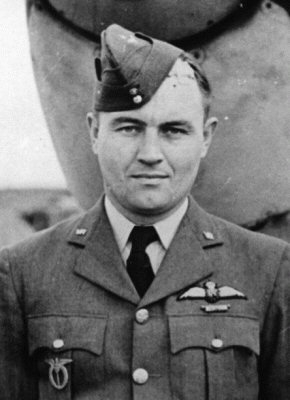 Frantisek Dolezal. Name : Frantisek Dolezal Born : 14th September 1909 Died : 4th October 1945 Air Victories : 10.00 Awards : Croix de Guerre Distinguished Flying Cross Distinguished Service Order |
Born on September 14th, 1909 in Ceska Trebova, Dolezal studied mechanical engineering at Czech Technical University in Prague. Graduating in 1932, he began his military career and after completing his compulsory military service, decided to stay in the army. He completed his education in the air corps with top honors in 1936 and was commissioned as an air force lieutenant. Completing his training in 1937, he qualified as a pilot and lookout. He joined 36th air squadron of the second air regiment in Olomouc, equipped with AVIA B-534. At the beginning of the Nazi occupation of the Czechoslovakia in 1938, Dolezal was promoted to squadron first officer. Dolezal fled to Poland and later to France, joining L'Arme de l'Air. Most Czech fighter pilots in France served under Dolezal flew Morane Saulner MS-406. During the French campaign he shot down 4 German fighter planes, 3 of them confirmed kills and 1 probable, and was honored with the Croix dr Guerre. On the fall of France on June 16th, 1940, Dolezal with other pilots flew to Africa and then further to Liverpool, where he spent time in quarantine at the Cholmondeley camp. After this he was automatically admitted to the Royal Air Force as Pilot Officer (P/O). He was transferred to Duxford, where the No.310 Czechoslovakian Squadron was created. Due to large number of pilots, he was finally moved to the No.19 Squadron. Flying Spitfires with No.19 Sqn, Dolezal shot down 4 Luftwaffe aircraft and damaged one. During combat with a Messerschmitt Me109 his knee was injured. Returning to the No.310 Sqn, he was immediately appointed as the wing commander and simultaneously promoted to Flight Lieutenant and was later promoted to Squadron Leader. With No.310 Sqn, Dolezal shot down 2 aircraft and damaged 2 others. He was awarded the Distinguished Flying Cross on 1st September 1942. He later became a co-comander of Churstaton, where the 312 and 313 Squadrons were based. He began his second operational tour as Wing Commander. He took command of the second Czechoslovakian Wing when the commander Karel Mrazek left. During this time, he achieved his last victory. He was awarded the Distinguished Service Order on 17th June 1944. After finishing his second operational tour, he finally left operating service and was appointed Czech liaison officer. Later, he worked as a Czechoslovakian air force inspector in London. In 1944 he moved to the U.S., where he studied at U.S. Army Command and General Staff College at Fort Leavenworth. After completing his studies, he went back to London where he continued to work as a Czechoslovakian air force inspector. At the beginning of 1945 Dolezal was promoted to major and on March 3rd, 1945 left the RAF and started to work at Ministry of Defence in London. He was one of the first RAF pilots to returned to Czechoslovakia after the war. During a service flight from Prague to Zlin on 4th October 1945 he lost his life tragically in an accident in a Sibel Si 204 training aircraft when the plane crashed near Bucovice na Morave. |
COMBAT REPORTS |
19 Squadron Operational Record Book – 21 August 1940. P/Os Dolezal and Huadil, Sgts. Plzaxk and Marek of 310 Squadron attached to us to-day. All Czechs and very keen and eager to have a crack. |
Known Service Details : | |||||||
Squadron | Rank | Start of Service | End of Service | Known Dates | Aircraft | Airframes | Notes |
Pilot Officer | 21st August 1940 | unknown | |||||
Wing Commander | unknown | unknown | 21st August 1940 | Loaned from this squadron to No.19 Sqn on 21st August 1940. | |||
Photos Submitted Through Our Directory |
 Frantisek Dolezal. |
Known Victory Claims : | ||||||||
Date | Rank | Squadron | Claimed | Location | Time | Aircraft Flown | Notes | |
07/09/1940 | Pilot Officer | |||||||
10/09/1940 | Pilot Officer | |||||||
18/09/1940 | Pilot Officer | |||||||
Known Individual Aircraft : | ||||||||
Type | Serial | Codes | First Flew | Squadron History | Aircrew History | History Notes | Engine | Factory |
FD | - | Merlin 46 | Castle Bromwich Aircraft Factory | |||||
| Aircraft for : Frantisek Dolezal | ||
| A list of all aircraft associated with Frantisek Dolezal. A profile page including a list of all art prints for the aircraft is available by clicking the aircraft name. | ||
| Aircraft | Info | |
Hurricane 
Manufacturer : Hawker Production Began : 1936 Number Built : 14533 | Hurricane Royal Air Force Fighter, the Hawker Hurricane had a top speed of 320mph, at 18,200 feet and 340mph at 17,500, ceiling of 34,200 and a range of 935 miles. The Hurricane was armed with eight fixed wing mounted .303 browning machine guns in the Mark I and twelve .303 browning's in the MKIIB in the Hurricane MKIIC it had four 20mm cannon. All time classic fighter the Hurricane was designed in 1933-1934, the first prototype flew in June 1936 and a contract for 600 for the Royal Air Force was placed. The first production model flew ion the 12th October 1937 and 111 squadron of the Royal Air Force received the first Hurricanes in January 1938. By the outbreak of World war two the Royal Air Force had 18 operational squadrons of Hurricanes. During the Battle of Britain a total of 1715 Hurricanes took part, (which was more than the rest of the aircraft of the Royal air force put together) and almost 75% of the Victories during the Battle of Britain went to hurricane pilots. The Hawker Hurricane was used in all theatres during World war two, and in many roles. in total 14,533 Hurricanes were built. | |
Spitfire 
Manufacturer : Supermarine Production Began : 1936 Retired : 1948 Number Built : 20351 | Spitfire Royal Air Force fighter aircraft, maximum speed for mark I Supermarine Spitfire, 362mph up to The Seafire 47 with a top speed of 452mph. maximum ceiling for Mk I 34,000feet up to 44,500 for the mark XIV. Maximum range for MK I 575 miles . up to 1475 miles for the Seafire 47. Armament for the various Marks of Spitfire. for MK I, and II . eight fixed .303 browning Machine guns, for MKs V-IX and XVI two 20mm Hispano cannons and four .303 browning machine guns. and on later Marks, six to eight Rockets under the wings or a maximum bomb load of 1,000 lbs. Designed by R J Mitchell, The proto type Spitfire first flew on the 5th March 1936. and entered service with the Royal Air Force in August 1938, with 19 squadron based and RAF Duxford. by the outbreak of World war two, there were twelve squadrons with a total of 187 spitfires, with another 83 in store. Between 1939 and 1945, a large variety of modifications and developments produced a variety of MK,s from I to XVI. The mark II came into service in late 1940, and in March 1941, the Mk,V came into service. To counter the Improvements in fighters of the Luftwaffe especially the FW190, the MK,XII was introduced with its Griffin engine. The Fleet Air Arm used the Mk,I and II and were named Seafires. By the end of production in 1948 a total of 20,351 spitfires had been made and 2408 Seafires. The most produced variant was the Spitfire Mark V, with a total of 6479 spitfires produced. The Royal Air Force kept Spitfires in front line use until April 1954. | |
| Squadrons for : Frantisek Dolezal | ||
| A list of all squadrons known to have been served with by Frantisek Dolezal. A profile page is available by clicking the squadron name. | ||
| Squadron | Info | |
No.19 Sqn RAF Country : UK Founded : 1st September 1915 Possunt quia posse videntur - They can because they think they can | No.19 Sqn RAF o. 19 Squadron was formed from a nucleus provided by No. 5 Reserve Squadron at Castle Bromwich on 1 September 1915. It was almost a year later that the Squadron went to France, flying contact patrols with BE12s before re-equipping with French-built Spads. These were used to strafe ground troops during the battles at Arras, Messines Ridge and Ypres. Early in 1918, Sopwith Dolphins arrived and these were used in bomber escort duties. A year after the end of the War, the Squadron was disbanded reforming on 1 April 1924 at Duxford. The Squadron remained at Duxford throughout the inter-war years with a succession of fighters: Siskins, Bulldogs and Gauntlets receiving Spitifre on the 4th August 1938 The Squadron was stationed in the UK after the outbreak of the Second World War,the Squadron fought well over the evacuation at Dunkirk where they lost 4 aircraft for the destruction of 13 E.A.'s. The Squadron destroyed 2 He 111's on the night of the 19th of June 1940, and was part of No. 12 Group RAF, RAF Fighter Command, during the Battle of Britain. 19 Squadron formed part of the Duxford Wing, 12 Group's 'Big Wing' formation. Later versions of Spitfires were flown until the arrival of Mustangs for close-support duties in early 1944. After D-Day, No. 19 briefly went across the English Channel before starting long-range escort duties from RAF Peterhead for Coastal Command off the coast of Norway. After world war two the squadron flew at first de Havilland Hornets and later a variety of jet fighter aircraft including the Hawker Hunter fighter then re-equipping with English Electric Lightning, (1962 - 1964) at that time 19 Sqdn was based at RAF Station Leconfield. The Squadron and the sister Squadron 92 were called upon as fast response interceptors during the "cold war", later being disbanded on 9 January 1992. Their final location before being disbanded was RAF Wildenrath in Germany near Geilenkirchen | |
No.310 Sqn RAF Country : UK Founded : 10th July 1940 Fate : Disbanded 15th February 1946 Czech We fight to rebuild | No.310 Sqn RAF Full profile not yet available. | |
Return to Aviation Directory Search Home
|
Everything we obtain for this site is shown on the site, we do not have any more photos, crew lists or further information on any of the ships. COPYRIGHT NOTICE. ALL IMAGES DISPLAYED ON THIS WEBSITE ARE PROTECTED BY COPYRIGHT LAW, AND ARE OWNED BY CRANSTON FINE ARTS OR THEIR RESPECTIVE OWNERS. NO REPRODUCTION OR COPYING ALLOWED ON OTHER WEBSITES, BOOKS OR ARTICLES WITHOUT PRIOR AGREEMENT. |
|
Contact Details |
|
Sign Up To Our Newsletter!
This website is owned by Cranston Fine Arts. Torwood House, Torwoodhill Road, Rhu, Helensburgh, Scotland, G848LE Contact: Tel: (+44) (0) 1436 820269. Email: cranstonorders -at- outlook.com |
 |

