|
|
|
|
|
|

|
Naval History by Country :
|
|||||||||||||
| VIEW ALL OF OUR CURRENT ART SPECIAL OFFERS ON ONE PAGE HERE | |||
| NAVAL ART | AVIATION ART | MILITARY ART | SPORT ART |
|
|
William Hoy |
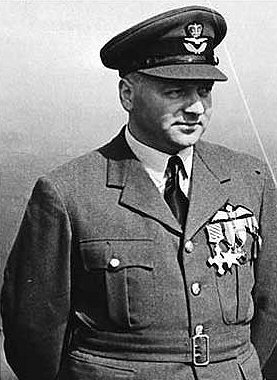 Wing Commander William Hoy Name : William Hoy Born : 23rd December 1918 Died : 20th November 2012 Awards : Distinguished Flying Cross |
William Hoy was born in Edinburgh on December 23 1918 and educated at George Watson’s College, where he won a scholarship to the RAF College, Cranwell. He graduated as a pilot in October 1939. He flew Anson and Hudson aircraft on shipping sweeps over the North Sea, taking part in the operations over the Norwegian coast after the German invasion in April 1940. He then joined No 420 Flight, flying the antiquated Harrow bomber on operations to drop aerial mines by night. The mines were attached to 2,000ft of piano wire in the hope that enemy bombers would fly into the wire, causing the mines to strike them and explode. There are no recorded successes. Converting to the Beaufighter night fighter in late 1941, Hoy joined No 604 Squadron and was soon appointed a flight commander. On the night of July 29 1942 he shot down a Heinkel bomber off Land’s End and, in spring 1943, he accounted for two more off the coast of Yorkshire and damaged a third. On another occasion he led another Beaufighter on a well-planned attack on an enemy reconnaissance aircraft, which was destroyed as a direct result of Hoy’s initiative. In July 1943 he was awarded a DFC. After a rest period, Hoy returned to the front line as flight commander of 25 Squadron, flying the Mosquito. On July 9 1944 he shot down a V-1 flying bomb over the Channel. After the war Hoy commanded two night fighter squadrons before being appointed wing commander, flying at Church Fenton in Yorkshire – the home of four fighter squadrons. He attended No 1 Course at the new RAF Flying College at Manby, Lincolnshire, before taking up an appointment in the Middle East. After his flight in Aries V, Hoy served with Nato and at the Air Ministry. His last appointment before retiring in 1966 was as station commander at RAF Manston in Kent. William Hoy died on 20th November 2012. |
Known Service Details : | |||||||
Squadron | Rank | Start of Service | End of Service | Known Dates | Aircraft | Airframes | Notes |
1941 | unknown | 29th July 1942 | |||||
unknown | unknown | 09th July 1944 | |||||
Photos Submitted Through Our Directory |
 Wing Commander William Hoy |
Known Victory Claims : | |||||||
Date | Rank | Squadron | Claimed | Location | Time | Aircraft Flown | Notes |
29/07/1942 | Off Lands End. | ||||||
09/07/1944 | English Channel | V-1 flying bomb. | |||||
| Aircraft for : William Hoy | ||
| A list of all aircraft associated with William Hoy. A profile page including a list of all art prints for the aircraft is available by clicking the aircraft name. | ||
| Aircraft | Info | |
Anson 
Manufacturer : Avro Production Began : 1935 Retired : 1968 Number Built : 11020 | Anson he Avro Anson originated from the Avro 652 commercial aircraft which first flew on 7th January 1935. It was a twin-engine British-built multi-role aircraft which saw distinctive service with both the Royal Air Force and The Royal Navy Fleet Air Arm as well as The Royal Canadian Air Force during and after the Second World War. The prototype 652A first flew at Woodford on 7th January 1935 and was developed from an initial airliner design and named after Admiral George Anson. The adaptation for a coastal reconnaissance role resulted in the production variant, the Avro 652a, which flew at Woodford on New Years Eve 1935 with the type entering service in March 1936 as the Anson Mk1. Initially it was flown with a 3-man crew but later developments in its reconnaissance role required a 4th crew member. The Anson entered service on 6 March 1936 with 48 Squadron equipped with the Anson. At the start of the Second World War, the RAF had received 824 Ansons and there were 26 RAF squadrons operating the Anson I: 10 with Coastal Command and 16 with Bomber Command. All of the squadrons in Bomber Command in 1939 with Anson Is were operational training squadrons that prepared crews for frontline service. 12 of the squadrons were in No. 6 (Operational Training) Group. Newly formed crews having completed individual flying and technical training were first trained as bomber crews in Ansons and then advanced to the various frontline aircraft types, which were also in the same squadrons with the Ansons. After training in the frontline aircraft type, crews would advance to the frontline bomber squadrons with those aircraft types (Fairey Battle, Bristol Blenheim, Vickers Wellington, Armstrong Whitworth Whitley, and Handley-Page Hampden). At the start of the war, the Lockheed Hudson was beginning to replace the Ansons in Coastal Command with one squadron of Hudsons and one with both Ansons and Hudsons. Limited numbers of Ansons continued to serve in operational roles such as coastal patrols and air/sea rescue. Early in the war, an Anson scored a probable hit on a German U-boat. In June 1940, a flight of three Ansons was attacked by nine Luftwaffe Messerschmitt Bf 109s. Remarkably, before the dogfight ended, without losing any of their own, one of the Ansons destroyed two German aircraft and damaged a third. The aircraft's true role, however, was to train pilots for flying multi-engined bombers such as the Avro Lancaster. The Anson was also used to train the other members of a bomber's aircrew, such as navigators, wireless operators, bomb aimers and air gunners. Postwar, the Anson continued in the training and light transport roles. The last Ansons were withdrawn from RAF service with communications units on 28 June 1968. The Royal Australian Air Force operated 1,028 Ansons, mainly Mk Is, until 1955 | |
Beaufighter 
Manufacturer : Bristol Production Began : 1940 Number Built : 5564 | Beaufighter BRISTOL BEAUFIGHTER The Bristol Beaufighter was a Torpedo Bomber and had a crew of two. with a maximum speed of 330mph and a ceiling of 29,000 feet. maximum normal range of 1500 miles but could be extended to 1750 miles. The Bristol Beaufighter carried four 20mm cannon in the belly of the aircraft and upto six .303in browning machine guns in the wings. it could also carry eight 3 -inch rockets, 1605 lb torpedo or a bomb load of 1,000 lb. The Bristol Beaufighter first flew in July 1939 and with some modifications entered service with the Royal Air Force in July 1940. In the winter of 1940 - 1941 the Beaufighter was used as a night fighter. and in March 1941 the aircraft was used at Coastal Command as a long range strike aircraft. and in 1941, the Beaufighter arrived in North Africa and used as a forward ground attack aircraft. The Bristol Beaufighter was used also in India, Burma and Australia. A total of 5,564 Beaufighters were built until production in Britain finished in 1945, but a further 364 were built in Australia for the Australian Air Force | |
Harrow
Manufacturer : Handley Page Production Began : 1937 Retired : 1945 Number Built : 100 | Harrow The first Harrow was delivered to No. 214 Squadron RAF on 13 January 1937, with all 100 delivered by the end of the year, with five bomber squadrons of the RAF being equipped with the Harrow. The Fleet Air Arm ordered 100 Harrows but Handley Page lacked the production capacity to supply them. Despite being fitted with cabin heating by steam boilers using exhaust heat, the Harrow gained a reputation of being a cold and draughty aircraft, owing to the turret design. As the delivery of more modern bombers increased, the Harrow was phased out as a frontline bomber by the end of 1939 but continued to be used as a transport. 271 Squadron was formed on 1 May 1940 with a mixture of Harrows, Bristol Bombays and impressed civil aircraft. While the other aircraft equipping 271 Squadron were replaced by Douglas Dakotas, it retained a flight of Harrows (sometimes nicknamed "Sparrows" due to their new nose fairings to give a more streamlined fuselage) as transports and ambulance aircraft until the end of the Second World War in Europe. Harrows were used occasionally to operate risky flights between England and Gibraltar, two being lost on this route. Harrows also operated in support of Allied forces, in their advance into north-west Europe, evacuating wounded from the Arnhem operation in September 1944. Seven Harrows were destroyed by a low level attack by Luftwaffe fighters of JG 26 and JG 54 on Evere airfield as part of Operation Bodenplatte, the German attack on Allied airfields in northwest Europe on 1 January 1945, leaving only five Harrows, which were eventually retired on 25 May 1945. The Harrow also served in a novel operational role at the height of the German night Blitz against Britain in the winter of 1940–1941. Six Harrows equipped No. 420 Flight RAF (later No. 93 Squadron RAF) which used lone Harrows to tow Long Aerial Mines (LAM) into the path of enemy bombers. The LAM had an explosive charge on the end of a long cable and the unorthodox tactic was credited with the destruction of six German Bombers or 4–5, depending on the source. The experiment was judged of poor value and the planned deployment of Douglas Havocs in the LAM role was cancelled. Nine Harrows were also used by 782 Naval Air Squadron, Fleet Air Arm as transports. After flight refuelling trials, three Harrows were operated by Flight Refuelling Limited and refuelled Short Empire Flying Boats on transatlantic services, two from Gander, Newfoundland and one based in Foynes, Ireland. In 1940, the two aircraft based at Gander were impressed into service with the Royal Canadian Air Force. | |
Hudson 
Manufacturer : Lockheed Production Began : 1939 Number Built : 2584 | Hudson In 1938, the British Purchasing Commission sought an American maritime patrol aircraft and light bomber for the United Kingdom to support the Royal Air Force's Avro Anson. On 10th December 1938, Lockheed produced a modified version of the Lockheed Model 14 Super Electra which was a commercial airliner and the Hudson Mk I went into production. The Hudson was the first significant aircraft construction contract for the Lockhead Aircraft Corporation with the initial RAF order for 200 Hudsons far surpassed any previous order the company had received. By February 1939, Hudsons began to be delivered. A total of 350 Mk I and 20 Mk II Hudsons were supplied in total. These had two fixed Browning machine guns in the nose and two more in a Boulton Paul dorsal turret. Initially the first batch of Hudsons were supplied to No.224 Squadron RAF based at RAF Leuchers in May 1939. By the start of the war in September 78 Hudsons were in service. Not only did the RAF use the Hudson but the Hudson also served throughout the war with Coastal Command and was also used in transport and training roles as well as delivering agents into occupied France. They were also used extensively with the Royal Canadian Air Force wiht their anti-submarine squadrons. They were operated by RAF Special Duties squadrons for clandestine operations, with No.161 Squadron in Europe and No.357 Squadron operating in Burma. During the war, they were used as maritime patrol aircraft in the Pacific by the US Navy, the RAAF and the Royal New Zealand Air Force. A total of 2,584 Hudsons were built. They began to be withdrawn from front line service in 1944. The Hudson provided the basis for the development of the Lockhead Ventura. | |
Mosquito 
Manufacturer : De Havilland Production Began : 1940 Retired : 1955 Number Built : 7781 | Mosquito Used as a night fighter, fighter bomber, bomber and Photo-reconnaissance, with a crew of two, Maximum speed was 425 mph, at 30,300 feet, 380mph at 17,000ft. and a ceiling of 36,000feet, maximum range 3,500 miles. the Mosquito was armed with four 20mm Hospano cannon in belly and four .303 inch browning machine guns in nose. Coastal strike aircraft had eight 3-inch Rockets under the wings, and one 57mm shell gun in belly. The Mossie at it was known made its first flight on 25th November 1940, and the mosquito made its first operational flight for the Royal Air Force as a reconnaissance unit based at Benson. In early 1942, a modified version (mark II) operated as a night fighter with 157 and 23 squadron's. In April 1943 the first De Haviland Mosquito saw service in the Far east and in 1944 The Mosquito was used at Coastal Command in its strike wings. Bomber Commands offensive against Germany saw many Mosquitos, used as photo Reconnaissance aircraft, Fighter Escorts, and Path Finders. The Mosquito stayed in service with the Royal Air Force until 1955. and a total of 7781 mosquito's were built. | |
| Squadrons for : William Hoy | ||
| A list of all squadrons known to have been served with by William Hoy. A profile page is available by clicking the squadron name. | ||
| Squadron | Info | |
No.25 Sqn RAF Country : UK Founded : 25th September 1915 Feriens Tego - Striking I defend | No.25 Sqn RAF No. 25 Squadron was formed at Montrose in Scotland on 25 September 1915 from the personnel of No. 6 Reserve Squadron. Moving to France in February 1916, the Squadron took up fighter/reconnaissance patrols over the Western Front with two-seat FE2Bs. During 1917, the Squadron transferred to long-range reconnaissance and high-altitude bombing with newly received DH4s. After moving to Germany as part of the occupation forces, No. 25 Squadron returned to the UK and disbanded in January 1920. The squadron reformed the next day at RAF Hawkinge, flying Snipes, and went to Turkey in 1922/23 during the Chanak Crisis. After returning to the UK the unit stayed for a number of years at Hawkinge. The Snipes gave way to Grebes and later Siskins, while in December 1936 the squadron became the first unit to receive the Hawker Fury Mk II, having already flown the Fury Mk I since 1932. The Fury was replaced by the Hawker Demon when the squadron was given a night-fighter role. For night-flying training purposes the squadron also received Gloster Gladiators. No. 25(F) Squadron moved to RAF Northolt on 12 September 1938. During World War II it flew Blenheims on night patrols, which were replaced by Beaufighters and later Mosquitos. By the closing stages of the war, the squadron was almost entirely committed to bomber escort missions. After the war, the night-fighter Mosquitos remained on strength until 1951 when they were finally replaced by Vampires. A mix of two Meteor night-fighter variants replaced the Vampires in 1954 and remained with the Squadron until it was disbanded in June 1958. Barely a week later, on 1 July 1958, No. 153 Squadron at Waterbeach was renumbered No. 25 and the same mix of Meteors (NF12s and NF14s) was flown until all-weather Javelin fighters arrived in early 1959. In November 1962, the Squadron again disbanded, this time until October 1963, when the Squadron was reformed at North Coates as the first operational Bloodhound surface-to-air guided missile unit. In 1970, the Squadron moved to Bruggen with detached Flights based at Laarbruch and Wildenrath, remaining in Germany until 1983 when the unit returned to the UK with bases at Wyton, Barkston Heath and Wattisham. The Bloodhounds were withdrawn from service on 1 August 1989 and the Squadron reformed the same day at Leeming as a Tornado F3 squadron. During its time at Leeming, the squadron has had operational tours in the Gulf, providing air and groundcrews for the detachment of Tornado F3 based in Saudi Arabia on a rotational basis with other air defence squadrons. This ceased following the Operation Telic in 2003. | |
No.604 Sqn RAF Country : UK Founded : 17th March 1930 Fate : Disbanded 10th March1957 County of Middlesex (Auxiliary) Si vis pacem, para bellum - If you want peace, prepare for war | No.604 Sqn RAF Full profile not yet available. | |
Return to Aviation Directory Search Home
|
Everything we obtain for this site is shown on the site, we do not have any more photos, crew lists or further information on any of the ships. COPYRIGHT NOTICE. ALL IMAGES DISPLAYED ON THIS WEBSITE ARE PROTECTED BY COPYRIGHT LAW, AND ARE OWNED BY CRANSTON FINE ARTS OR THEIR RESPECTIVE OWNERS. NO REPRODUCTION OR COPYING ALLOWED ON OTHER WEBSITES, BOOKS OR ARTICLES WITHOUT PRIOR AGREEMENT. |
|
Contact Details |
|
Sign Up To Our Newsletter!
This website is owned by Cranston Fine Arts. Torwood House, Torwoodhill Road, Rhu, Helensburgh, Scotland, G848LE Contact: Tel: (+44) (0) 1436 820269. Email: cranstonorders -at- outlook.com |
 |

