|
|
|
|
|
|

|
Naval History by Country :
|
|||||||||||||
| VIEW ALL OF OUR CURRENT ART SPECIAL OFFERS ON ONE PAGE HERE | |||
| NAVAL ART | AVIATION ART | MILITARY ART | SPORT ART |
|
|
Brian Beattie |
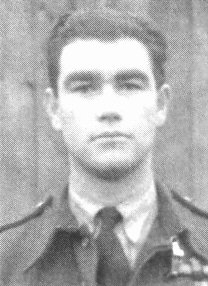 Name : Brian Beattie |
Having served at 489 Coastal Command flying torpedo carrying Hampdens, he later joined Des Curtis at 248 Sqn where he also flew the Tse-Tse firing Mosquito. |
Known Service Details : | |||||||
Squadron | Rank | Start of Service | End of Service | Known Dates | Aircraft | Airframes | Notes |
unknown | unknown | ||||||
unknown | unknown | ||||||
Artwork signed by this Pilot or Aircrew |
  Shining the Way (Mosquito) by Ivan Berryman. (B) |   Destination Amiens by Ivan Berryman. |   Return From Leipzig by Anthony Saunders. (D) |
  A Moment's Peace by Ivan Berryman. (APB) |   Shell House Raiders by Ivan Berryman. (APB) |   Dangerous Coast by Robert Taylor. |
  Devastating Strike by Robert Taylor. |   Overture to Overlord by David Pentland |   Mosquitos by Keith Woodcock. (B) |
 Turmoil in Norwegian Waters by Marii Chernev. (B) |
Photos Submitted Through Our Directory |
 |
| Aircraft for : Brian Beattie | ||
| A list of all aircraft associated with Brian Beattie. A profile page including a list of all art prints for the aircraft is available by clicking the aircraft name. | ||
| Aircraft | Info | |
Hampden 
Manufacturer : Handley Page Retired : 1942 Number Built : 1500 | Hampden The Handley Page HP.52 Hampden was a twin-engine medium bomber built for the Royal Air Force and was used by Bomber Command in the early years of world war two. Along with the other medium bombers the Whitley and Wellington, the Hampden bore the brunt of the early bombing war over Europe, taking part in the first night raid on Berlin and the first 1,000-plane raid on Cologne. The newest of the three medium bombers, the Hampden was known as the Flying Suitcase because of its cramped crew conditions. A total of 226 Hampdens were in service with eight Royal Air Force squadrons by the start of the Second World War. Despite its speed and agility, in operational use the Hampden was no match for the fighters of the Luftwaffe (ME109 and FW 190) and the Hampdens role as a day bomber was brief, but Hampdens continued to operate at night on bombing raids over Germany and in mine laying (code-named gardening) in the North Sea. Almost half of the Hampdens built – 714, were lost on operations, witht he loss of 1,077 crew killed and another 739 missing. German flak accounted for 108; with one Hampden being lost due to German Barrage balloons; 263 Hampdens crashed due to a variety of causes, and 214 others were classed as missing. Luftwaffe pilots claimed 128 Hampdens, shooting down 92 at night. The Hampden soon became obsolete for its roll as a medium modern bomber, after operating mainly at night, it was retired from Bomber Command service in late 1942. but continued with Coastal Command throughout 1943 as a long-range Torpedo Bomber (the Hampden TB Mk I which carried the Mk XII torpedo in an open bomb-bay and a single 500 lb (230 kg) bomb under each wing) The Hampden was also used by the Royal Canadian Air Force and Royal New Zealand Air Force. | |
Mosquito 
Manufacturer : De Havilland Production Began : 1940 Retired : 1955 Number Built : 7781 | Mosquito Used as a night fighter, fighter bomber, bomber and Photo-reconnaissance, with a crew of two, Maximum speed was 425 mph, at 30,300 feet, 380mph at 17,000ft. and a ceiling of 36,000feet, maximum range 3,500 miles. the Mosquito was armed with four 20mm Hospano cannon in belly and four .303 inch browning machine guns in nose. Coastal strike aircraft had eight 3-inch Rockets under the wings, and one 57mm shell gun in belly. The Mossie at it was known made its first flight on 25th November 1940, and the mosquito made its first operational flight for the Royal Air Force as a reconnaissance unit based at Benson. In early 1942, a modified version (mark II) operated as a night fighter with 157 and 23 squadron's. In April 1943 the first De Haviland Mosquito saw service in the Far east and in 1944 The Mosquito was used at Coastal Command in its strike wings. Bomber Commands offensive against Germany saw many Mosquitos, used as photo Reconnaissance aircraft, Fighter Escorts, and Path Finders. The Mosquito stayed in service with the Royal Air Force until 1955. and a total of 7781 mosquito's were built. | |
| Squadrons for : Brian Beattie | ||
| A list of all squadrons known to have been served with by Brian Beattie. A profile page is available by clicking the squadron name. | ||
| Squadron | Info | |
No.248 Sqn RAF Country : UK Founded : August 1918 Fate : Disbanded 30th September 1946 Il faut en finir - It is necessary to make an end of it | No.248 Sqn RAF Full profile not yet available. | |
No.489 Sqn RNZAF Country : New Zealand Founded : 12th August 1941 Fate : Disbanded 1st August 1945 Coastal Command Whakatanagata kia kaha - Quit ye like me, be strong | No.489 Sqn RNZAF Full profile not yet available. | |
Return to Aviation Directory Search Home
|
Everything we obtain for this site is shown on the site, we do not have any more photos, crew lists or further information on any of the ships. COPYRIGHT NOTICE. ALL IMAGES DISPLAYED ON THIS WEBSITE ARE PROTECTED BY COPYRIGHT LAW, AND ARE OWNED BY CRANSTON FINE ARTS OR THEIR RESPECTIVE OWNERS. NO REPRODUCTION OR COPYING ALLOWED ON OTHER WEBSITES, BOOKS OR ARTICLES WITHOUT PRIOR AGREEMENT. |
|
Contact Details |
|
Sign Up To Our Newsletter!
This website is owned by Cranston Fine Arts. Torwood House, Torwoodhill Road, Rhu, Helensburgh, Scotland, G848LE Contact: Tel: (+44) (0) 1436 820269. Email: cranstonorders -at- outlook.com |
 |

