|
|
|
|
|
|

|
Naval History by Country :
|
|||||||||||||
| VIEW ALL OF OUR CURRENT ART SPECIAL OFFERS ON ONE PAGE HERE | |||
| NAVAL ART | AVIATION ART | MILITARY ART | SPORT ART |
|
|
Bill Edwards |
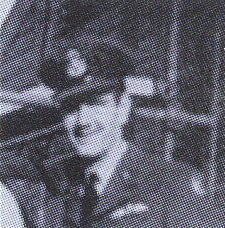 Colonel Bill Edwards Name : Bill Edwards Died : 7th August 2009 |
Bill Edwards applied to the USAAF but was turned down because of two missing molars. He volunteered for the RAF in 1940, and was readily accepted and was shipped to Tulsa's Spartan School for RAF training. Upon graduation, he was sent to an OTU in England flying Hurricanes and Spitfires. He was assigned to the 133 Squadron, last of the famed 'Eagle Squadrons.' He flew convoy escort duty out of Northern Ireland and delivered all types of British aircraft to and from operational units. By September 1942, Lt. Edwards joined the USAAF along with most other Eagle Squadron pilots who wore the wings of both the RAF and USAAF. Assigned to the 8th Air Force Fighter Command, Bill's job was to ensure that newly arriving fighter units received first hand information on British navigating systems, aircraft, maps etc. As a Major, Bill commanded the first P-51 / P-38 OTU in England providing intensive flying in all combat and weather conditions. In June, 1944, Major Edwards was assigned with his Eagle Squadron friends to the Fourth Fighter Group flying P-51Ds escorting bombers on deep missions into Germany. During one escort mission to Munich, which bill was leading, Bill's Mustang was hit by German '88 flack' and downed near the French and German border. Bill spent the remainder of the war as a POW at Stalag Luft I, Barth, Germany until liberated in June 1945. Bill Edwards flew a total of 37 combat operations with 133 Squadron, the third Eagle Squadron to be formed. He retired from the USAF in 1968. Sadly Colonel Bill Edwards died on the 7th of August 2009. |
Known Service Details : | |||||||
Squadron | Rank | Start of Service | End of Service | Known Dates | Aircraft | Airframes | Notes |
unknown | September 1942 | ||||||
June 1944 | 13th July 1944 | Shot down, taken prisoner. | |||||
Artwork signed by this Pilot or Aircrew |
  Eagle Force by Robert Taylor. |
Photos Submitted Through Our Directory |
 Colonel Bill Edwards |
| Aircraft for : Bill Edwards | ||
| A list of all aircraft associated with Bill Edwards. A profile page including a list of all art prints for the aircraft is available by clicking the aircraft name. | ||
| Aircraft | Info | |
Hurricane 
Manufacturer : Hawker Production Began : 1936 Number Built : 14533 | Hurricane Royal Air Force Fighter, the Hawker Hurricane had a top speed of 320mph, at 18,200 feet and 340mph at 17,500, ceiling of 34,200 and a range of 935 miles. The Hurricane was armed with eight fixed wing mounted .303 browning machine guns in the Mark I and twelve .303 browning's in the MKIIB in the Hurricane MKIIC it had four 20mm cannon. All time classic fighter the Hurricane was designed in 1933-1934, the first prototype flew in June 1936 and a contract for 600 for the Royal Air Force was placed. The first production model flew ion the 12th October 1937 and 111 squadron of the Royal Air Force received the first Hurricanes in January 1938. By the outbreak of World war two the Royal Air Force had 18 operational squadrons of Hurricanes. During the Battle of Britain a total of 1715 Hurricanes took part, (which was more than the rest of the aircraft of the Royal air force put together) and almost 75% of the Victories during the Battle of Britain went to hurricane pilots. The Hawker Hurricane was used in all theatres during World war two, and in many roles. in total 14,533 Hurricanes were built. | |
Mustang 
Manufacturer : North American | Mustang The ubiquitous North American P-51 Mustang, which many consider to be the best all-around fighter of WW II, owes its origins to the British Air Ministry. Following Britains entry into WW II in 1939, the RAF was interested in purchasing additional fighter aircraft from American sources, particularly the Curtiss P-40. Curtiss, which was busy, was unable to guarantee timely delivery so the British approached North American Aviation as a possible second source for the P-40. North American chose to propose its own fighter design which would use the same Allison engine as the P-40. Utilizing new laminar flow wings, the North American fighter was expected to have performance better than the P-40. Developed in record time the new aircraft was designated as a Mustang I by the Brits, whereas the USAAF ordered two for evaluation which were designated XP-51 Apaches. Intrigued with the possibility of using this aircraft also as a dive bomber, North American proposed this to the USAAF which decided to order 500 of the P-51 aircraft to be modified for dive bombing use. Designated as the A-36 Invader, this version of the Mustang utilized dive flaps, and bomb racks under each wing. Some reinforcing of the structural members was also required because of the G-forces to be encountered in dive bombing. A-36s entered combat service with the USAAF prior to any P-51s. In early 1943 the 86th and 27th Fighter Bomber Groups of the 12th Air Force began flying A-36s out of Northern Africa. Despite some early problems with instability caused by the dive flaps, the A-36 was effective in light bombing and strafing roles. It was not, however, capable of dog fighting with German fighters, especially at higher altitudes. Despite these drawbacks one USAAF pilot, Captain Michael T. Russo, who served with the 16th Bomb Squadron of the 27th Fighter Bomber Group, was credited with five confirmed aerial victories in the A-36, thereby becoming the first mustang ace. | |
Spitfire 
Manufacturer : Supermarine Production Began : 1936 Retired : 1948 Number Built : 20351 | Spitfire Royal Air Force fighter aircraft, maximum speed for mark I Supermarine Spitfire, 362mph up to The Seafire 47 with a top speed of 452mph. maximum ceiling for Mk I 34,000feet up to 44,500 for the mark XIV. Maximum range for MK I 575 miles . up to 1475 miles for the Seafire 47. Armament for the various Marks of Spitfire. for MK I, and II . eight fixed .303 browning Machine guns, for MKs V-IX and XVI two 20mm Hispano cannons and four .303 browning machine guns. and on later Marks, six to eight Rockets under the wings or a maximum bomb load of 1,000 lbs. Designed by R J Mitchell, The proto type Spitfire first flew on the 5th March 1936. and entered service with the Royal Air Force in August 1938, with 19 squadron based and RAF Duxford. by the outbreak of World war two, there were twelve squadrons with a total of 187 spitfires, with another 83 in store. Between 1939 and 1945, a large variety of modifications and developments produced a variety of MK,s from I to XVI. The mark II came into service in late 1940, and in March 1941, the Mk,V came into service. To counter the Improvements in fighters of the Luftwaffe especially the FW190, the MK,XII was introduced with its Griffin engine. The Fleet Air Arm used the Mk,I and II and were named Seafires. By the end of production in 1948 a total of 20,351 spitfires had been made and 2408 Seafires. The most produced variant was the Spitfire Mark V, with a total of 6479 spitfires produced. The Royal Air Force kept Spitfires in front line use until April 1954. | |
| Squadrons for : Bill Edwards | ||
| A list of all squadrons known to have been served with by Bill Edwards. A profile page is available by clicking the squadron name. | ||
| Squadron | Info | |
4th Fighter Group Country : US The Eagles. Stationed at Debden. Click the name above to see prints featuring aircraft of 4th Fighter Group | 4th Fighter Group The Eagles. Stationed at Debden. | |
No.133 Sqn RAF Country : UK Founded : 1st March 1918 Fate : Disbanded 29th September 1942 Eagle Let us to the battle | No.133 Sqn RAF Full profile not yet available. | |
Return to Aviation Directory Search Home
|
Everything we obtain for this site is shown on the site, we do not have any more photos, crew lists or further information on any of the ships. COPYRIGHT NOTICE. ALL IMAGES DISPLAYED ON THIS WEBSITE ARE PROTECTED BY COPYRIGHT LAW, AND ARE OWNED BY CRANSTON FINE ARTS OR THEIR RESPECTIVE OWNERS. NO REPRODUCTION OR COPYING ALLOWED ON OTHER WEBSITES, BOOKS OR ARTICLES WITHOUT PRIOR AGREEMENT. |
|
Contact Details |
|
Sign Up To Our Newsletter!
This website is owned by Cranston Fine Arts. Torwood House, Torwoodhill Road, Rhu, Helensburgh, Scotland, G848LE Contact: Tel: (+44) (0) 1436 820269. Email: cranstonorders -at- outlook.com |
 |

