|
|
|
|
|
|

|
Naval History by Country :
|
|||||||||||||
| VIEW ALL OF OUR CURRENT ART SPECIAL OFFERS ON ONE PAGE HERE | |||
| NAVAL ART | AVIATION ART | MILITARY ART | SPORT ART |
|
|
John de Severne |
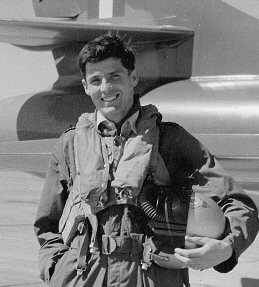 John de Severne Name : John de Severne Born : 15th August 1925 Died : 4th October 2015 Awards : Air Force Cross |
Air Vice-Marshal Sir John Severne, who has died aged 90, was a Cold War fighter pilot before becoming Equerry to the Duke of Edinburgh; after a series of senior command posts in the RAF he was appointed Captain of the Queens Flight. Ever since he was a small boy building model aeroplanes, Severne had been passionate about flying. His career in the RAF ranged from post-war fighters and jet trainers to the Nimrod maritime patrol aircraft. He won the Kings Cup Air Race in 1960 and became the British Air Racing Champion the same year, flying a Turbulent aircraft entered by the Duke of Edinburgh. In addition to the 32 service aircraft types, he flew 39 different civilian light aircraft. The son of a Royal Flying Corps observer and doctor, John de Milt Severne was born in London on August 15 1925 and educated at Marlborough, where he served in the Officer Training Corps and Home Guard. He was a light aircraft enthusiast from his first flight in a Gipsy Moth at the age of 10. He joined the RAF in April 1944 and completed his training as a pilot in October 1945. He first flew the Mosquito night fighter with 264 Squadron for two years, before leaving for the Central Flying School (CFS) . He trained as a flying instructor and spent the next few years teaching student pilots before returning to CFS to train instructors. In 1952, while still serving at CFS, Severne was able to participate for the first time in the Kings Cup Air Race, an annual event that had fascinated him from his school days. In January 1954, he joined No 98 Squadron, flying Venom day fighter/ground attack aircraft based in northern Germany close to the Iron Curtain. He was soon appointed a flight commander. On November 1 1954 he was carrying out a looping manoeuvre when the engine of his Venom caught fire. A few days earlier a colleague had suffered the same failure and had died when he tried to land the aircraft. Severne would have been justified in ejecting from his single-engine fighter but elected to crash land so that investigations into the incident could be carried out. He landed alongside the runway with the wheels retracted as the fire continued to burn, and managed to scramble clear. For his gallantry he was awarded the AFC. He converted to the Hunter fighter and in January 1956 took command of No 26 Squadron, also based in northern Germany. Following the 1957 Defence White Paper, which stated that air-defence missiles would replace manned fighters, Severne had the distasteful task of telling his men that their squadron was to be disbanded. After a year in the personnel department of the Air Ministry, Severne was appointed to be Equerry to the Duke of Edinburgh. Among other duties he was responsible for making all travel arrangements for the Duke and accompanying him on many trips. This allowed him to travel with the Queens Flight and he took the opportunity to learn to fly helicopters. In 1959 Severne entered Kings Cup Air Race flying a Turbulent painted in the Dukes colours. After a creditable performance, the aircraft was entered again the following year. A number of modifications were made, which resulted in Severne winning the coveted Kings Cup while wearing his daughters riding hat as a crash helmet. After two years, and promotion to wing commander, Severne was appointed LVO and returned to RAF service. After completing the RAF Staff College course, he flew Javelin and Lightning fighters during his appointment as wing commander flying at RAF Middleton St George (now Teesside Airport). With the closure of the RAF airfield, he became the chief instructor of the Lightning Operational Conversion Unit at Coltishall in Norfolk. Severnes next appointment was a very different affair. He left for Aden in January 1966 as the political situation in the Protectorate worsened. He was responsible for the operations of fighter and maritime reconnaissance aircraft, and helicopters working in co-operation with the Army. Hunter aircraft, which he flew on operations, were kept very busy patrolling the Yemen border and attacking dissidents. The Shackleton maritime patrol aircraft were heavily engaged in the Beira Patrol, the implementation of the Rhodesian oil embargo. As the dissident and terrorism activity increased, Severne was also heavily involved in the planning for the withdrawal from Aden of British forces scheduled for November 1967. On November 28 he was one of the last RAF officers to leave Aden. For his services he was appointed OBE. Severnes already varied flying career took another turn in January 1971 when he was appointed to command the RAFs largest maritime base at Kinloss in Scotland. His three squadrons of Nimrods patrolled the North Atlantic shadowing Soviet submarines and powerful surface fleets. He accumulated almost 500 hours flying time in two years and once commented: Flying low over the sea at 200 ft, at night, in bad weather, 1,000 miles over the North Atlantic, concentrates the mind no end. He also flew the Shackleton in the airborne early warning role. During his command of Kinloss, the station was awarded the Wilkinson Sword of Peace for 1971, which he accepted from the Duke of Edinburgh. In 1972 he was appointed as an ADC to the Queen. After attending the Royal College of Defence Studies, Severne returned to the Central Flying School as Commandant. This provided him with a wide variety of flying opportunities with the RAF, including having the Red Arrows under his command . After leaving CFS in February 1976 Severne spent two years responsible for all flying training in the RAF before taking over as Commander, Southern Maritime Region, an appointment that also carried two senior Nato war appointments. He controlled all British and Nato maritime aircraft, when operating out of British bases, south of a line from southern Ireland to Greenland. He also controlled the Rescue Co-ordination Centre, which included air-sea rescue helicopters. His last flight in the RAF was piloting a Whirlwind helicopter during a training air-sea rescue sortie. He retired from the RAF in 1980. In 1982 he was recalled to be Captain of the Queens Flight and a member of the Royal Household. Severne travelled worldwide with members of the Royal family. After seven years, he finally retired, at which point he was advanced to KCVO. His retirement to Somerset was almost as busy as his service life. He served as a Deputy Lieutenant of the county from 1991 to 2001 and was Honorary Air Commodore of No 3 Maritime Headquarters of the Royal Auxiliary Air Force. He was president of the SW Region of the Royal Air Force Association and also president of the Queen’s Flight Association and of the Central Flying School Association. A man of great charm, he was a keen photographer and took a close interest in local affairs. He was Chapel Warden at Ditcheat Church and raised £25,000 for the restoration of the churchs Alhampton Chapel, a project completed in 2011. He wrote his autobiography Silvered Wings in 2007. He never lost his love of flying and a week before his 90th birthday, and 80 years after his first flight in a Gypsy Moth, he took the controls of a Tiger Moth. John Severne married Katharine Kemball in November 1951. She and their three daughters survive him. Air Vice-Marshal Sir John Severne, born August 15 1925, died October 4 2015. |
Known Service Details : | |||||||
Squadron | Rank | Start of Service | End of Service | Known Dates | Aircraft | Airframes | Notes |
October 1945 | 1947 | ||||||
January 1954 | unknown | ||||||
Artwork signed by this Pilot or Aircrew |
  Queens Flight by Robert Taylor. |
Photos Submitted Through Our Directory |
 John de Severne |
| Aircraft for : John de Severne | ||
| A list of all aircraft associated with John de Severne. A profile page including a list of all art prints for the aircraft is available by clicking the aircraft name. | ||
| Aircraft | Info | |
Javelin
| Javelin Full profile not yet available. | |
Mosquito 
Manufacturer : De Havilland Production Began : 1940 Retired : 1955 Number Built : 7781 | Mosquito Used as a night fighter, fighter bomber, bomber and Photo-reconnaissance, with a crew of two, Maximum speed was 425 mph, at 30,300 feet, 380mph at 17,000ft. and a ceiling of 36,000feet, maximum range 3,500 miles. the Mosquito was armed with four 20mm Hospano cannon in belly and four .303 inch browning machine guns in nose. Coastal strike aircraft had eight 3-inch Rockets under the wings, and one 57mm shell gun in belly. The Mossie at it was known made its first flight on 25th November 1940, and the mosquito made its first operational flight for the Royal Air Force as a reconnaissance unit based at Benson. In early 1942, a modified version (mark II) operated as a night fighter with 157 and 23 squadron's. In April 1943 the first De Haviland Mosquito saw service in the Far east and in 1944 The Mosquito was used at Coastal Command in its strike wings. Bomber Commands offensive against Germany saw many Mosquitos, used as photo Reconnaissance aircraft, Fighter Escorts, and Path Finders. The Mosquito stayed in service with the Royal Air Force until 1955. and a total of 7781 mosquito's were built. | |
Nimrod 
| Nimrod Full profile not yet available. | |
Venom 
| Venom Full profile not yet available. | |
| Squadrons for : John de Severne | ||
| A list of all squadrons known to have been served with by John de Severne. A profile page is available by clicking the squadron name. | ||
| Squadron | Info | |
No.264 Sqn RAF Country : UK Founded : 27th September 1918 Fate : Disbanded 30th November 1962 Madras Presidency We defy | No.264 Sqn RAF 264 Squadron was formed from two former Royal Naval Air Service flights, No.439 and No.440, on 27th September 1918 at Souda bay in Crete with the role of anti-submarine patrols, and equipped with the Short 184 floatplanes. The Squadron was disbanded on 1 March 1919. On 8th December 1939 at Martlesham Heath, 264 Squadron was reformed and equipped with the new Boulton Paul Defiant fighter. In March 1940 the squadron started operations doing convoy patrols. After initial successes the Luftwaffe soon realised that the Defiant was vulnerable to frontal attack, and 264 Squadron along with the other Boulton Paul Defiant squadrons started to suffer heavy losses of aircraft and crew. At the end of May 1940, 264 Squadron was withdrawn from operations as a day-fighter squadron and began to train in the night-fighter role. During the Battle of Britain 264 Squadron was used again for day fighting but again suffered losses and returned to the night-fighter role. In May 1942 the squadron was re-equipped with Mosquito II and moved to RAF Colerne, and later receieved the new Mark VI. The squadron operated as night-fighters in the west of England and also in the role of day patrols in the Bay of Biscay and western approaches. 264 Squadron later became part of the 2nd Tactical Air Force providing night patrols over Europe and near the end of the war it was based at Twente in Holland patrolling over Berlin. 264 squadron was disbanded at Twente on 25th August 1945. | |
No.98 Sqn RAF Country : UK Founded : 15th August 1917 Fate : Disbanded 27th February 1976 Never failing | No.98 Sqn RAF Full profile not yet available. | |
Return to Aviation Directory Search Home
|
Everything we obtain for this site is shown on the site, we do not have any more photos, crew lists or further information on any of the ships. COPYRIGHT NOTICE. ALL IMAGES DISPLAYED ON THIS WEBSITE ARE PROTECTED BY COPYRIGHT LAW, AND ARE OWNED BY CRANSTON FINE ARTS OR THEIR RESPECTIVE OWNERS. NO REPRODUCTION OR COPYING ALLOWED ON OTHER WEBSITES, BOOKS OR ARTICLES WITHOUT PRIOR AGREEMENT. |
|
Contact Details |
|
Sign Up To Our Newsletter!
This website is owned by Cranston Fine Arts. Torwood House, Torwoodhill Road, Rhu, Helensburgh, Scotland, G848LE Contact: Tel: (+44) (0) 1436 820269. Email: cranstonorders -at- outlook.com |
 |

