|
|
|
|
|
|

|
Naval History by Country :
|
|||||||||||||
| VIEW ALL OF OUR CURRENT ART SPECIAL OFFERS ON ONE PAGE HERE | |||
| NAVAL ART | AVIATION ART | MILITARY ART | SPORT ART |
|
|
Allan Wright |
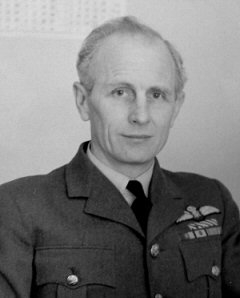 Group Captain Allan Wright Name : Allan Wright Born : 12th February 1920 Died : 16th September 2015 Air Victories : 11.00 Awards : Distinguished Flying Cross Air Force Cross |
Born Devon 12th February 1920. He entered RAF College Cranwell as Flight Cadet April 1938. After training Allan was posted to 92 Sqn at Tangmere on 27 October. Over Dunkirk on 23 May 1940 he destroyed an Me110 and possibly two more, on the 24th a possible He111 and on 2 June a confirmed Me109. During the Battle of Britain he destroyed a He111 on 14 August, a He111 at night over Bristol on 29 August, a He111 and Me109 on 11 Sept, a He111 on the 14th, a Me109 on the 15th, a Ju88 on the 19th, a Do17 on the 26th, a Ju88 on the 27th plus damaging a He111, a Do17, two Ju88s, two Me109s on the 30th. On 30 Sept he was shot down wounded near Brighton and hospitalised. An award of the DFC was made on 22 October 1940. On 6 December 1940 he destroyed a Me109. By July 1941 Wright had destroyed 6 more Me109s and received a bar to the DFC on 15 July. Service at HQ Fighter Command and as an instructor followed until being posted to 29 Squadron at West Malling in March 1943 where he destroyed a Ju88 on 3 April. Further command postings saw him through the war and post-war till 12 February 1967 when he retired as a Group Captain. Group Captain Allan Wright, who has died aged 95, was a veteran of the Battle of France in 1940 and one of the last three surviving Battle of Britain ace fighter pilots. As the opening phase of the Battle of Britain commenced in July 1940, Wright and his colleagues of No 92 Squadron were resting in South Wales following their fierce activity covering the withdrawal of the British Expeditionary Force from the beaches of northern France. Nevertheless, Wright shared in the destruction of a German bomber over Gloucestershire and on August 29 achieved a rare success for a Spitfire pilot when he engaged a Heinkel III bomber over Bristol at night and shot it down. On September 9th No.92 Sqn was sent to Biggin Hill, at the height of the battle, to intercept the large formations of enemy bombers attacking London. Within two days Wright achieved success when he destroyed another Heinkel bomber and probably one of the escorting Messerschmitt Bf 109 fighters. In the space of the next 20 days, as the battle reached its climax, he was credited with knocking out four more enemy aircraft, sharing in the destruction of a fifth, probably destroying a further two and damaging four. On September 30th he engaged some Bf 109 fighters near Brighton and shot one down. His Spitfire was damaged and he had to make a forced landing. He was slightly wounded in this engagement and this signalled the end of his involvement in the battle. A month later he was awarded the DFC for displaying great determination and skill. The son of Air Commodore A C Wright, a Royal Flying Corps pilot and regular RAF officer, Allan Richard Wright was born at Teignmouth, Devon, on February 12 1920 and educated at St Edmunds College. He was awarded a cadetship to the RAF College, Cranwell, where he gained a commendation before graduating as a pilot in October 1939. Wright joined No.92 Squadron as it was re-equipping with the Spitfire. Flying from Northolt, the squadron was soon in action over Dunkirk. Wright flew his first patrol on May 23rd, when he destroyed a Messerschmitt Bf 110, possibly brought down another and damaged a third. His successes were tempered by the loss of his closest friend from his time at Cranwell. Many years later he commented: We were just 22 years old and I was overwhelmed by shock and disbelief. The whole episode seemed a dream. The squadron's commanding officer, Squadron Leader Roger Bushell, was also shot down on this day. Later, as Big X, Bushell masterminded the Great Escape from Stalag Luft III, but he was murdered by the Gestapo after being recaptured. Wright flew six more patrols over the Dunkirk area, being engaged and firing his guns every time, and was credited with shooting down an enemy fighter and possibly destroying a bomber. After recovering from wounds sustained in the closing phase of the Battle of Britain, Wright returned to No.92 Sqn and, in December, shot down a Bf 109. He saw considerable action over northern France during the spring and summer of 1941. Fighter Command had gone on the offensive, seeking combat, and Wright gained further success. Flying the Spitfire Mk V on sweeps and bomber escort operations, he was frequently engaged by Bf 109s and he destroyed one, shared in the destruction of another and probably destroyed two more. On one occasion his Spitfire was badly damaged but he managed to cross the Channel back to England to make an emergency landing. He was rested in July after a year of constant combat and was awarded a Bar to his DFC. Wright then trained fighter pilots before becoming the chief instructor at the newly formed Pilot Gunnery Instructors School. He later undertook a tour of the United States to discuss gunnery and fighter tactics. On his return he trained as a night fighter pilot before becoming the flight commander on No.29 Squadron flying the Beaufighter. On April 3rd 1943 he shot down a Junkers 88 bomber and damaged a second, his final success of the war. As a 23-year-old wing commander, he took command of the Air Fighting Development Unit, his service recognised by the award of the AFC. In early 1945 he left for Egypt to command the fighter wing of a bombing and gunnery school. He remained in the RAF and held a number of fighter-related appointments including four years at the Air Ministry responsible for air defence planning. After converting to jet fighters he became wing commander, flying at Waterbeach near Cambridge with Hunter and Javelin squadrons under his command. After two years in the Far East and a further two at HQ, Fighter Command, he was appointed to command the Ballistic Missile Early Warning Station (BMEWS) – the famous Giant Golf Balls – situated on the Yorkshire Moors at Fylingdales, near Whitby. This was the final site of three – the others operated by the USAF at Thule in Greenland and Clear in Alaska – to provide early warning of a ballistic missile attack. Fylingdales became fully operational during Wrights period of command. He retired from the RAF in February 1967. He moved to North Devon where he spent the next 10 years developing a smallholding and renovating a cottage. He was an excellent and meticulous carpenter and woodworker. He married his wife Barbara in June 1942 and she and their two sons and two daughters survive him. Group Captain Allan Wright, born February 12 1920, died September 16 2015. |
Known Service Details : | |||||||
Squadron | Rank | Start of Service | End of Service | Known Dates | Aircraft | Airframes | Notes |
unknown | unknown | ||||||
Group Captain | unknown | unknown | 29th August 1940 | ||||
Artwork signed by this Pilot or Aircrew |
  Spitfire Scramble by Philip West. (AP) |  Evening Glory by Philip West. (AP) |   Spitfires Safely Home by Stephen Brown. (AP) |
  Pride of Britain by Philip West. (AP) |   Fight for the Sky by Robert Taylor. |   First Loss by David Pritchard. (B) |
  Shot in the Dark by David Pritchard. |   After the Battle by Robert Taylor. |
Photos Submitted Through Our Directory |
 Group Captain Allan Wright |
Known Victory Claims : | |||||||
Date | Rank | Squadron | Claimed | Location | Time | Aircraft Flown | Notes |
29/08/1940 | Flying Officer | ||||||
11/09/1940 | Flying Officer | ||||||
26/09/1940 | Flying Officer | ||||||
27/09/1940 | Flying Officer | Half Shared Victory. | |||||
27/09/1940 | Flying Officer | ||||||
| Aircraft for : Allan Wright | ||
| A list of all aircraft associated with Allan Wright. A profile page including a list of all art prints for the aircraft is available by clicking the aircraft name. | ||
| Aircraft | Info | |
Beaufighter 
Manufacturer : Bristol Production Began : 1940 Number Built : 5564 | Beaufighter BRISTOL BEAUFIGHTER The Bristol Beaufighter was a Torpedo Bomber and had a crew of two. with a maximum speed of 330mph and a ceiling of 29,000 feet. maximum normal range of 1500 miles but could be extended to 1750 miles. The Bristol Beaufighter carried four 20mm cannon in the belly of the aircraft and upto six .303in browning machine guns in the wings. it could also carry eight 3 -inch rockets, 1605 lb torpedo or a bomb load of 1,000 lb. The Bristol Beaufighter first flew in July 1939 and with some modifications entered service with the Royal Air Force in July 1940. In the winter of 1940 - 1941 the Beaufighter was used as a night fighter. and in March 1941 the aircraft was used at Coastal Command as a long range strike aircraft. and in 1941, the Beaufighter arrived in North Africa and used as a forward ground attack aircraft. The Bristol Beaufighter was used also in India, Burma and Australia. A total of 5,564 Beaufighters were built until production in Britain finished in 1945, but a further 364 were built in Australia for the Australian Air Force | |
Spitfire 
Manufacturer : Supermarine Production Began : 1936 Retired : 1948 Number Built : 20351 | Spitfire Royal Air Force fighter aircraft, maximum speed for mark I Supermarine Spitfire, 362mph up to The Seafire 47 with a top speed of 452mph. maximum ceiling for Mk I 34,000feet up to 44,500 for the mark XIV. Maximum range for MK I 575 miles . up to 1475 miles for the Seafire 47. Armament for the various Marks of Spitfire. for MK I, and II . eight fixed .303 browning Machine guns, for MKs V-IX and XVI two 20mm Hispano cannons and four .303 browning machine guns. and on later Marks, six to eight Rockets under the wings or a maximum bomb load of 1,000 lbs. Designed by R J Mitchell, The proto type Spitfire first flew on the 5th March 1936. and entered service with the Royal Air Force in August 1938, with 19 squadron based and RAF Duxford. by the outbreak of World war two, there were twelve squadrons with a total of 187 spitfires, with another 83 in store. Between 1939 and 1945, a large variety of modifications and developments produced a variety of MK,s from I to XVI. The mark II came into service in late 1940, and in March 1941, the Mk,V came into service. To counter the Improvements in fighters of the Luftwaffe especially the FW190, the MK,XII was introduced with its Griffin engine. The Fleet Air Arm used the Mk,I and II and were named Seafires. By the end of production in 1948 a total of 20,351 spitfires had been made and 2408 Seafires. The most produced variant was the Spitfire Mark V, with a total of 6479 spitfires produced. The Royal Air Force kept Spitfires in front line use until April 1954. | |
| Squadrons for : Allan Wright | ||
| A list of all squadrons known to have been served with by Allan Wright. A profile page is available by clicking the squadron name. | ||
| Squadron | Info | |
No.29 Sqn RAF Country : UK Founded : 7th November 1915 Impiger et acer - Energetic and keen | No.29 Sqn RAF No 29 Squadron was formed at Gosport on 7 November 1915 from a nucleus supplied by No 23 Squadron, and after training moved to France in March 1916 as the third squadron to be fully equipped with fighters. Its DH2s were engaged in escort duties to protect the slow and vulnerable reconnaissance aircraft over the Western Front ,By late 1916 the DH.2 was outclassed by new German fighters, but No. 29 kept its pushers until March 1917, when it was re-equipped with Nieuport 17s. These were replaced with later Nieuport types, such as the Nieuport 24bis, as these became available. Due to a shortage of the Royal Aircraft Factory S.E.5a the squadron retained its Nieuports until April 1918, being replaced by SE5As, which were used for the rest of the war on fighter and ground -attack missions. After a short period in Germany, the squadron Squadron was reduced to a cadre and in August 1919 returned to Spittlegate in the UK, in August 1919 where it was disbanded on 31 December 1919. The squadron was reformed on 1 April 1923, initially equipped with Sopwith Snipes. These were replaced by Gloster Grebes in January 1925, In turn, these were replaced by the Armstrong Whitworth Siskin IIIA in March 1928 and Bristol Bulldogs in June 1932. In March 1935, the squadron received two-seater Hawker Demons, which it operated until 1938. This included service in Egypt from October 1935 to 1936, during the Abyssinian crisis. The squadron also operated a few old Fairey Gordons for night patrols in Egypt. No 29 began the Second World War with its Blenheims, which at the period operated as day fighters – especially on convoy protection patrols. From June 1940 it became a night fighter squadron, receiving some of the first Beaufighters in November, though it was February 1941 before the squadron was fully equipped with the new fighter. Various marks of the de Havilland Mosquito were flown by the squadron from May 1943 culminating in the Mosquito NF30. From the middle of 1944 most of the squadron’s missions took it over the continent. The Mosquitoes continued to serve until replaced by Meteors in August 1951 at Tangmere. In January 1957 the squadron Squadron moved north, first to Northumberland and then in July 1958 to Scotland, conversion to Javelins taking having taken place in November 1957. In February 1963, No 29 was moved to Cyprus and in December 1965 went detached to Zambia for nine months on detachmentduring the Rhodesian crisis. In May 1967 the squadron Squadron returned to the UK to become are-equip with Lightnings squadron, disbanding on 31 December 1974. No 29 reformed at Coningsby as a Phantom squadron on 1 January 1975. A detachment was provided for the defence of the Falklands as soon as the airfield at Stanley was capable of operating Phantoms at the endin August of 1982. This became No 23 Squadron in March 1983 The Squadron swapped its Phantoms for Tornado F3 fighters in 1987 remaining at Coningsby until disbanded in October 1998. Five years later, the squadron was reformed, this time as the Typhoon operational conversion unit (OCU) based at BAE Systems' Warton airfield. In April 1987, No 29 Squadron became the first operational squadron to be equipped with the Tornado F3, deploying to Saudi Arabia after the Iraqi invasion of Kuwait in August 1990 and flying throughout Operation DESERT STORM in the air-defence role. The Squadron was again disbanded in October 1998. | |
No.92 Sqn RAF Country : UK Founded : 1st September 1917 Fate : Disbanded 1st October 1994 East India Aut pugna aut morere - Either fight or die | No.92 Sqn RAF 92 Squadron was formed in the First World War, as a squadron of the Royal Flying Corps, on 1st September 1917. It flew Pups, Spads and SE5s during the war, becoming an RAF squadron on the formation of the RAF on 1st April 1918, before being disbanded on 7th August 1919. On the outbreak of hostilities of World War Two, 92 Sqn reformed on 10th October 1939, flying Blenheims before converting to Spitfires. It transferred to North Africa, and for some time flew as part of 244 Wing RAF. After the war, the squadron was disbanded on 30th December 1946. On 31st January 1947, the former 91 Squadron was redesignated 92 Squadron, flying the Meteor before re-equipping with the Sabre and then the Hunter. While flying the Hunter in 1960, the squadron was designated as the RAF's aerobatic squadron, with the name Blue Diamonds, a name the squadron carried on after tranferring to the Lightning. The squadron then re-equipped with Phantoms, before being disbanded on 1st July 1991. It was reformed from a rserve squadron on 23rd September 1992, and became No.92 (Reserve) Squadron, flying the Hawk aircraft before being disbanded once more on 1st October 1994. | |
Return to Aviation Directory Search Home
|
Everything we obtain for this site is shown on the site, we do not have any more photos, crew lists or further information on any of the ships. COPYRIGHT NOTICE. ALL IMAGES DISPLAYED ON THIS WEBSITE ARE PROTECTED BY COPYRIGHT LAW, AND ARE OWNED BY CRANSTON FINE ARTS OR THEIR RESPECTIVE OWNERS. NO REPRODUCTION OR COPYING ALLOWED ON OTHER WEBSITES, BOOKS OR ARTICLES WITHOUT PRIOR AGREEMENT. |
|
Contact Details |
|
Sign Up To Our Newsletter!
This website is owned by Cranston Fine Arts. Torwood House, Torwoodhill Road, Rhu, Helensburgh, Scotland, G848LE Contact: Tel: (+44) (0) 1436 820269. Email: cranstonorders -at- outlook.com |
 |

