|
|
|
|
|
|

|
Naval History by Country :
|
|||||||||||||
| VIEW ALL OF OUR CURRENT ART SPECIAL OFFERS ON ONE PAGE HERE | |||
| NAVAL ART | AVIATION ART | MILITARY ART | SPORT ART |
|
|
Paul Zorner |
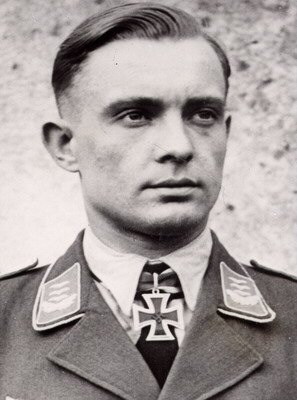 Paul Zorner Name : Paul Zorner Died : 27th January 2014 Air Victories : 59.00 Awards : Knights Cross Oak Leaves to the Knights Cross |
Originally a transport pilot, Paul Zorner flew in North Africa, the Mediterranean and southern Russia before retraining as a nightfighter pilot, joining II./NJG2 in 1942 flying the Ju88. In December he took command of 2./NJG3 operating first the Do217 and then the Me110. At the beginning of 1943 he was squadron commander of 3./NJG3 and then 8./NJG3, which he led until April 1944, when he took command of III./NJG5, re-equipping with the Ju88G-6. In October 1944 he was promoted to become Kommander of II./NJG100. Paul Zorner was credited with 59 victories and was awarded the Knight's Cross with Oak Leaves. |
Known Service Details : | |||||||
Squadron | Rank | Start of Service | End of Service | Known Dates | Aircraft | Airframes | Notes |
1942 | December 1942 | ||||||
December 1942 | April 1944 | ||||||
April 1944 | October 1944 | ||||||
October 1944 | unknown | ||||||
Artwork signed by this Pilot or Aircrew |
  Duel in the Dark by Robert Taylor. |   Moonlight Hunter by Nicolas Trudgian. |
Photos Submitted Through Our Directory |
 Paul Zorner |
Known Victory Claims : | |||||||
Date | Rank | Squadron | Claimed | Location | Time | Aircraft Flown | Notes |
17/01/1943 | Oblt. | 658 8H6: 2100m [45km NW Juist] | 21.55 | ||||
11/02/1943 | Oblt. | 64/1/5G9: 5300m [40km WNW Borkum] | 20.44 | ||||
19/02/1943 | Oblt. | 74/1/8H1 2700m [N. Norderney] | 20.34 | ||||
26/02/1943 | Oblt. | 64/3/1A5: 1400m [30km WNW Schiermonnikoog] | 20.46 | ||||
07/03/1943 | Oblt. | 234 6A1: 1700m [NE Norden] | 20.5 | ||||
14/03/1943 | Oblt. | 74/1/8F1: 900m [3km N. Norderney] | 3.51 | ||||
29/06/1943 | Oblt. | 9km NW Löwen: 4900m | 2.22 | ||||
29/06/1943 | Oblt. | SE Antwerpen | 2.2 | ||||
04/07/1943 | Oblt. | 2km E. Neerhespen: 5600m [SW St. Trond] | 1.09 | ||||
09/07/1943 | Oblt. | bei Harzé: 6500m [S. Malmédy/S. Liège] | 1.53 | ||||
25/07/1943 | Oblt. | Ten Boer: 5600m [11km NE Gröningen] | 3.54 | ||||
18/08/1943 | Oblt. | 15 Ost N/UH-.1.1: 4400m [vor Greifswald/Baltik] | 1.53 | ||||
18/08/1943 | Oblt. | Peenemünde: 2700m | 2.03 | ||||
23/11/1943 | Oblt. | 40km NW Berlin: 6500m | 20.09 | ||||
02/12/1943 | Oblt. | S. Sulingen: 5800m [bei Diepholz] | 19.24 | ||||
02/12/1943 | Oblt. | Raum SW Berlin: 5600m | 20.29 | ||||
20/12/1943 | Oblt. | Hintetmeilingen: 5400m | 20.02 | ||||
24/12/1943 | Oblt. | Rodsenhain: 5500m [E. Giessen] | 3.02 | ||||
24/12/1943 | Oblt. | Vechta-Quakenbrück: 6300m [S. Diepholz] | 5.43 | ||||
24/12/1943 | Oblt. | 2km NW Apeldoorn: 6100m [Cloppenburg] | 6.02 | ||||
03/01/1944 | Oblt. | bei Lückenwalde | 3.1 | ||||
06/01/1944 | Oblt. | NW Stettin | 3.42 | ||||
06/01/1944 | Oblt. | NW Stettin | 3.51 | ||||
20/01/1944 | Oblt. | NW Berlin | 19.45 | ||||
20/01/1944 | Oblt. | NW Berlin | 19.31 | ||||
15/02/1944 | Oblt. | 3km SE Ribuitz: 6300m | 20.22 | ||||
15/02/1944 | Oblt. | N. Neuruppin: 6600m | 21.11 | ||||
20/02/1944 | Oblt. | LF Köhne: 5800m | 3.04 | ||||
20/02/1944 | Oblt. | Nähe vor Wesendorf: 6000m | 3.17 | ||||
20/02/1944 | Oblt. | Nähe vor Gardelegen: 5800m | 3.26 | ||||
20/02/1944 | Oblt. | S. Briest: 3200m | 3.41 | ||||
24/02/1944 | Oblt. | W. Stuttgart: 5800m | 22.15 | ||||
24/02/1944 | Oblt. | WSW Stuttgart: 6500m | 22.2 | ||||
24/02/1944 | Oblt. | SW Stuttgart: 6000m | 22.3 | ||||
25/02/1944 | Oblt. | W. Stuttgart: 6700m | 0.25 | ||||
25/02/1944 | Oblt. | N. Stuttgart: 5500m | 0.51 | ||||
22/03/1944 | Hptm. | Raum Giessen: 5900m | 21.43 | ||||
22/03/1944 | Hptm. | Raum Giessen: 5900m | 22.18 | ||||
24/03/1944 | Hptm. | LF: 6700m [E. Leipzig] | 22.57 | ||||
26/03/1944 | Hptm. | W. St. Trond: 5800m | 23.04 | ||||
26/03/1944 | Hptm. | Frankreich Grenze: 5800m | 22 | ||||
21/04/1944 | Hptm. | 20km SE Brussels: 4000m | 3.3 | ||||
23/04/1944 | Hptm. | Raum Aachen: 6000m | 1.03 | ||||
28/04/1944 | Hptm. | SW Strasbourg: 5500m | 1.51 | ||||
28/04/1944 | Hptm. | NW Friedrichshafen: 6000m | 2.1 | ||||
28/04/1944 | Hptm. | C0-DO: 5200m | 1.2 | ||||
01/06/1944 | Hptm. | Villeguines-Anmont: 3000m | 2.35 | ||||
03/06/1944 | Hptm. | 30km WNW vor FF Évreux: 1600m | 1.22 | ||||
11/06/1944 | Hptm. | BC-2: 2500m [W. Dreux] | 1 | ||||
11/06/1944 | Hptm. | BC-2: 2500m [SE Verneuil-sur-Avre] | 1.01 | ||||
11/06/1944 | Hptm. | BC-1: 2300m [SE Verneuil-sur-Avre] | 1.08 | ||||
11/06/1944 | Hptm. | BC-5 [10km SW Dreux] | 1.42 | ||||
25/06/1944 | Hptm. | E. Boulogne: 2500m | 0.32 | ||||
25/06/1944 | Hptm. | NW vor Etaples: 2700m | 0.5 | ||||
01/07/1944 | Hptm. | HD-JD-JE: 2400m [120° Vatan] | 1.22 | ||||
25/07/1944 | Hptm. | 50km SE FuF. "Kuh" 3200m | 2.25 | ||||
25/07/1944 | Hptm. | 30km SW FuF. "Kuh": 3400m | 2.35 | ||||
25/07/1944 | Hptm. | 30km NW St. Dizier: 3600m | 2.54 | ||||
06/03/1945 | Hptm. | SSE Graz | 1.3 | ||||
| Aircraft for : Paul Zorner | ||
| A list of all aircraft associated with Paul Zorner. A profile page including a list of all art prints for the aircraft is available by clicking the aircraft name. | ||
| Aircraft | Info | |
Do217 
Manufacturer : Dornier | Do217 Full profile not yet available. | |
Ju88 
Manufacturer : Junkers Production Began : 0 Retired : 0 Number Built : 15000 | Ju88 The German Junkers JU 88 twin engined Bomber of World war two. The first prototype first flew in December 1936 with a civilian registration of D-AQEN it managed a top speed of 360 mph. This would give the German air force the Luftwaffe a fast multi role bomber. The Junkers JU 88 was used as a night fighter, reconnaissance and Torpedo Bomber. In total there were 15,000 JU 88's built during the war JU88 losses unknown serial numbers at this stage 11/12.07.40: Target Avonmouth & Portishead: Ju 88A of I/KG 51 4 NCO's missing Failed to return and probably crashed into the sea. 11/12.07.40: Target Avonmouth & Portishead: Ju 88A of 3/KG 51 Ofw. Josef Rattel (F) killed 1 NCO injured 2 others uninjured This aircraft was unable to precisely identify the target because of intense flak. It suffered engine failure on the return flight and crashed and burnt out at Varnevil while on approach to landing. 22.08.40: Reconnaissance over Filton: Ju 88A-1, 7A+AL, of 3(F)/121 Ogefr. W.Kuhweide ( ) killed Ltn. R.Pfundtner ( ) POW injured Oblt. Baudler ( ) POW injured Flg. A.Leber ( ) POW injured Crashed at 16.00 hrs at Upcott Farm, Beaford, nr. Okehampton, Devon. Shot down by Spitfires of Green Section, 152 Sq. (Warmwell) following an attack by P/O. W.Beaumont. 11/12.04.41: Target Bristol area: Ju 88A-5, B3+GN of 5/KG 54 Uffz. Karl Funke (F) missing Fw. Josef Höhnhorst (Bf) missing Gefr. Heinz Bretschneider (Bs) missing Gefr. Horst Heller (B) missing Failed to return, probably crashed into the sea | |
Me110 
Manufacturer : Messerschmitt Production Began : 1938 | Me110 The Bf-110 grew out of Herman Gorings specifications for a multipurpose aircraft capable of penetrating deep into enemy airspace to clear the sky of enemy fighters in advance of German bomber formations. The aircraft would also be utilized as a long range interceptor, and as a ground support and ground attack bomber. The Bf-110 prototype first flew in 1936. The prototype was under powered with its Daimier Benz DB 600A engines. Several months passed before a go ahead was given for large scale production which commenced in 1938. Utilizing improved DB 601 engines, the early production 110s were as fast as any single engine fighter at that time, and had superior fire power. Their biggest apparent weakness was in the areas of armor protection for the crew, and in terms of maneuverability when compared to single seat fighters. The 110 was produced in large numbers and in many different variants. The 110D was the long range model. An additional belly tank was fitted to that aircraft, with several later variants having the more traditional drop tanks. The first serious test for the Bf-110 came during the Battle of Britain. About 300 Bf-110s were involved. They became easy prey for Hurricane and Spitfire pilots, and Bf-109s were often required to assist the 110s in their own defense. On August 15, 1940, which became known as Black Tuesday, the Bf-110s were ravaged by the RAF, and for the month over 100 aircraft were lost. On the Eastern Front the Bf-110 performed admirably in the early stages of Operation Barbarossa. With the Soviet Air Force weakened in the first several weeks of the attack, 110s were effectively utilized in a ground attack role. Ultimately, the Luftwaffe re-equipped a significant number of its 110s as night fighters. The aircraft performed well in this role because it was a good gun platform with sufficient speed to overtake the RAF night bombers. Such night missions were typically carried out with no Allied fighter escort, so the 110 night fighters would not have to engage or elude Allied fighters in this role. | |
| Squadrons for : Paul Zorner | ||
| A list of all squadrons known to have been served with by Paul Zorner. A profile page is available by clicking the squadron name. | ||
| Squadron | Info | |
NJG100 Country : Germany Click the name above to see prints featuring aircraft of NJG100 | NJG100 Full profile not yet available. | |
NJG2 Country : Germany Click the name above to see prints featuring aircraft of NJG2 | NJG2 I./NJG 2's initial role was unlike the other units of the Luftwaffe night fighter arm; as a Fernnachtjagd Gruppe they were tasked with long-range intruder missions over the UK, disrupting night flying training and harassing the returning Royal Air Force (RAF) bombers over their own airfields. Luftflotte 3's radio intercepts of Bomber Command's transmissions helped pinpoint the operational airfields in Eastern England. I./NJG 2 aircraft could then scramble to be over the airfields at the predicted times of the bomber's return. The technique employed was to mix with the returning bombers, orbit the bases, and either shoot down targets that presented themselves or drop 50 kilograms (110 lb) bombs across the runways Based at Gilze-Rijen in the Netherlands, operations commenced using just 7 JU 88 C-1 night fighters. Although most missions were carried out using the Junkers Ju 88C-1 and C-2, a few Dornier Do 215B-5 fighter conversions were trialled in the spring of 1941. The offensive over the UK yielded promising results- some 143 victory claims were made, and over 90 RAF aircraft were indeed lost between October 1940 and the start of 1942. There was also the additional disruption to RAF operations and the psychological effects on the RAF crews By October 1941 however night intruder sorties were curtailed, due to the inadequate number of aircraft available (I Gruppe never had more than 20 JU 88s operational) and the High Command's perceived lack of results; it was thought shooting down RAF bombers over the German homeland had a far greater morale effect than over the UK Among the most successful of the unit's pilots was Ufz. Heinz Strüning, who flew 66 intruder missions over England. He recorded his first night victory on 23/24 November - a RAF Vickers Wellington bomber and by the end of 1941 he had 9 victories. Leutnant Alfons Koster had, by October 1941, some 11 intruder victories. Lt. Hans Hahn was credited with 12 victories, all over England.[2] He was awarded the Knight's Cross of the Iron Cross In July 1941, but was killed in action in October 1941, colliding with an RAF Airspeed Oxford trainer he was trying to shoot down. II./NJG 2 flew more conventional operations at this time, based at Leeuwarden on the Dutch coast. In November 1941 4./NJG 2 moved to Catania, and would remain there until February 1942, when it transferred back to Leeuwarden and joined the rest of II./NJG 2. In November 1941 2./NJG 2 moved to Benghazi as part of Fliegerführer Afrika, and returned to Catania later in the month. The first 'kill' was claimed on 13 December, Obfw Sommer downing a Bristol Beaufighter over Crete. On 19 November 1941 the unit escorted Ju 88 bombers raiding shipping off Malta, Lt. Laufs shooting down a Hurricane of No. 126 Squadron. Early in 1942 both 2. and 3./NJG 2 was based at Benghazi until March 1942. Various demands for night cover meant from April onwards I./NJG 2 was scattered over the Mediterranean, with detachments based at Benina, Berca, Derna, Benghazi, El Quasaba and Crete. On 1 October, 7./NJG 2 was redesignated as 4./NJG 2. The unit's Leutnant Heinz Strüning was awarded the Knight's Cross of the Iron Cross on 29 October for 24 victories. One of this unit's Ju 88G-1 night fighters, from the 7th Staffel, with Geschwaderkennung style aircraft code 4R+UR, was landed at RAF Woodbridge by mistake on July 13, 1944, giving the Allies their first chance to examine a working example of the VHF-band Lichtenstein SN-2 airborne intercept radar, and Flensburg radar detector gear. This event resulted in a longer-wavelength deployment of Window to jam the SN-2 gear, and general removal of the Monica tail warning radar from all RAF Bomber Command heavy bombers By the end of the year NJG 2 were covering the night defence of the industrial Ruhr area, flying from Düsseldorf, Kassel, Gütersloh, and Köln. In the final weeks of the conflict, the unit began receiving the night fighter variant of the Junkers Ju 388 - thus making NJG 2 the first and only Luftwaffe detachment to use the nachtjager variant operationally. It is likely these machines were 388J-0 pre-production prototypes, as the 388 programme was cancelled before manufacture of the J-1 production series had begun. Given the haphazard and incomplete conditions of training in those final days of war, and the almost total depletion of aviation fuel stocks throughout what remained of the Reich, it is doubtful whether more than a handful of combat missions were flown by this new type. NJG 2 claimed approximately 800 air victories during its period of operations. | |
NJG3 Country : Germany Click the name above to see prints featuring aircraft of NJG3 | NJG3 Nachtjagdgeschwader 3 (NJG 3) was a Luftwaffe night fighter-wing of World War II. NJG 3 was formed on 29 September 1941 in Stade from Stab./Zerstörergeschwader 26. 1./NJG3 operated in the Mediterranean area between Feb 1941 and Oct 1941 (Feb 1941 - May 1941 Sicily, Argos [X. Fliegerkorps]; May 1941 - Aug 1941 Benghazi [Fl. Fü. Afrika], Aug 1941 - Oct 1941 Derna [Fl. Fü. Afrika]). 2./NJG3 operated in the Smolensk area from Feb 1942 - Mar 1942 (Luftwaffenkommando Ost), and was stationed at Wittmundhafen Mar 1942 to Apr 1944 (1. NJ-Div., from May 1942 2. JD). 3./NJG3 was detached at Kastrup/Copenhagen, at least between Aug 1943 and Mar 1944 (2. JD). 4./NJG3 was detached at Westerland from Sep 1941 to 21 Jan 1944 (1. NJ-Div., from May 1942 2. JD). Another detachment operated from Mainz-Finthen in late 1941 (1. NJ-Div.). 7./NJG3 was detached at Lüneburg from Nov 1941 to Apr 1943, Kastrup/Copenhagen Apr 1943 to Nov 1943, and Nordholz Nov 1943 to Apr 1944. 8./NJG3 was detached at Lüneburg from Apr 1943 to Apr 1944. Other detachments were based at Ingolstadt and Wunstorf. (All under 1. NJ-Div., later 2. JD) Known aircraft that the squadron had shot down 31 December 1944: 1 Short Stirling , LJ 914 620 Sqn. Crew unknown. Near Lister (this is most likely by NJS Norwegen) 22 February 1945: 1 Short Stirling Mk IV. LK 566. 190 Sqn. Crew killed. Near Tvedestrand 25 February 1945: 1 Handley Page Halifax MK III. NA 103. 298 Sqn. Crew killed. Near Arendal 25 February 1945: 1 Short Stirling MK IV. LJ 925. 196 Sqn. 3 Bailed out, 3 killed. Near Arendal 30 March 1945: 1 Short Stirling MK IV. LK 119. 161 Sqn. Crew Killed. Near Tvedestrand 30 March 1945: 1 Short Stirling MK IV. LK 332. 299 Sqn. Crew Killed. Risör 30 March 1945: 1 Short Stirling MK IV. LJ 888. 196 Sqn. Crew Killed. Arendal | |
NJG5 Country : Germany Click the name above to see prints featuring aircraft of NJG5 | NJG5 Full profile not yet available. | |
Return to Aviation Directory Search Home
|
Everything we obtain for this site is shown on the site, we do not have any more photos, crew lists or further information on any of the ships. COPYRIGHT NOTICE. ALL IMAGES DISPLAYED ON THIS WEBSITE ARE PROTECTED BY COPYRIGHT LAW, AND ARE OWNED BY CRANSTON FINE ARTS OR THEIR RESPECTIVE OWNERS. NO REPRODUCTION OR COPYING ALLOWED ON OTHER WEBSITES, BOOKS OR ARTICLES WITHOUT PRIOR AGREEMENT. |
|
Contact Details |
|
Sign Up To Our Newsletter!
This website is owned by Cranston Fine Arts. Torwood House, Torwoodhill Road, Rhu, Helensburgh, Scotland, G848LE Contact: Tel: (+44) (0) 1436 820269. Email: cranstonorders -at- outlook.com |
 |

