|
|
|
|
|
|

|
Naval History by Country :
|
|||||||||||||
| VIEW ALL OF OUR CURRENT ART SPECIAL OFFERS ON ONE PAGE HERE | |||
| NAVAL ART | AVIATION ART | MILITARY ART | SPORT ART |
|
|
Werner Streib |
|
Name : Werner Streib Died : 15th June 1986 Air Victories : 66.00 Awards : Knights Cross Oak Leaves to the Knights Cross Swords to the Knights Cross |
Werner Streib (13 June 1911 – 15 June 1986) was a German Luftwaffe military aviator during World War II, a night fighter ace credited with 68—one daytime and 67 nighttime—enemy aircraft shot down in about 150 combat missions. All of his nocturnal victories were claimed over the Western Front in Defense of the Reich missions against the Royal Air Force's Bomber Command. Born in Pforzheim, Streib grew up in the Weimar Republic and Third Reich. Following graduation from school, he began military service in the Reichswehr in 1934 and in 1936, transferred to the Luftwaffe. After training at various postings, he served with Zerstörergeschwader 1 (ZG 1—1st Destroyer Wing) flying a Messerschmitt Bf-110 heavy fighter at the outbreak of World War II. On 10 May 1940, Streib claimed his first aerial victory. In June 1940, he was appointed Staffelkapitän (squadron leader) of the 2. Staffel (2nd squadron) of ZG 1. Shortly later, this squadron became 2. Staffel of Nachtjagdgeschwader 1 (NJG 1—1st Night Fighter Wing). On the night of 19/20 July, Streib claimed his first nocturnal aerial victory. In October 1940, he was appointed Gruppenkommandeur (group commander) of the I. Gruppe of NJG 1 and by end-1940 was credited with nine aerial victories. In 1943, Streib was involved in evaluating the then new Heinkel He 219. Flying the He 219, he claimed five aircraft destroyed on 11/12 June 1943. Streib was appointed Geschwaderkommodore (wing commander) of NJG 1 on 1 July 1943. On 11 March 1944, he was awarded the Knight's Cross of the Iron Cross with Oak Leaves and Swords, an award to recognise extreme battlefield bravery or successful military leadership, for 66 confirmed victories. In March 1944, he was made Inspector of Night Fighters and he would stay in this post until the end of the war. Streib was involved in evaluating the then new Heinkel He 219 for its suitability as night fighter. On 25 March 1943, Streib flew He 219 V1 in mock combat combat against a Junkers Ju 188 E-1, piloted by Oberst Viktor von Loßberg, at the Erprobungstelle Rechlin, the Luftwaffe test facility at Rechlin. In this test the He 219 proved itself to be more than 25 kilometers per hour (16 miles per hour) faster than the Ju 188. The He 219 also easily outmaneuvered the Ju 188 in this test. The theoretically greater rate of climb of the Ju 188 proved to be incorrect. On the night of 11/12 June 1943, Streib, together with radio operator (Bordfunker) Unteroffizier Helmut Fischer, flew the prototype version He 219 V9, with the pre-production label A-0/R2 "G9+FB" (Werknummer 190009—factory number), in combat against the RAF and claimed five aerial victories. That night, Bomber Command had sent a force of 783 heavy bombers on an attack against Düsseldorf. Of this attack force, made up of Wellington, Handley Page Halifax, Short Stirling and Avro Lancaster bombers, 693 aircraft actually hit the target.[32] His five victory claims included a Halifax shot down at 01:05 in location 14 km (8.7 mi) southeast of Roermond, a second Halifax shot down at 01:20 in location 2 km (1.2 mi) southwest of Rheinberg, a third Halifax shot down at 01:55 in location 3 km (1.9 mi) north of Mook, a Lancaster shot down at 02:16 in location 18 km (11 mi) southwest of Nijmegen, and a fourth Halifax shot down at 02:22 in location 3 km (1.9 mi) west of Sambeek. This "ace-in-a-day" achievement took his total to 55 nocturnal aerial victories However, when returning to Venlo, Streib crashed the He 219 during landing. Low on fuel, Streib reported that during the landing approach the cockpit iced up, impairing his vision, necessitating an instrument approach. He activated the electrically controlled flaps and lowered the landing gear. Unnoticed by Streib, the flaps did not lock down and the electrically controlled flaps retracted themselves. Subsequently his airspeed was too high during the final approach. Streib, misjudging his airspeed, flared the aircraft and slammed it into the runway. The resulting shockwave ruptured the tires; the starboard engine and cockpit were torn off the aircraft. Both Streib and Fischer escaped with minor injuries |
Known Service Details : | |||||||
Squadron | Rank | Start of Service | End of Service | Known Dates | Aircraft | Airframes | Notes |
unknown | unknown | ||||||
Known Victory Claims : | |||||||
Date | Rank | Squadron | Claimed | Location | Time | Aircraft Flown | Notes |
20/07/1940 | Oblt. | Saerbeck | 2.15 | ||||
22/07/1940 | Oblt. | 10km N. Münster | 1.22 | ||||
30/08/1940 | Oblt. | 20km NNE Emmerich | 23.24 | ||||
31/08/1940 | Oblt. | Arnheim | 0.32 | ||||
30/09/1940 | Oblt. | Badbergen | 23.19 | ||||
30/09/1940 | Oblt. | Bersenbruck | 22.49 | ||||
30/09/1940 | Oblt. | Menslage | 23.35 | ||||
15/10/1940 | Hptm. | NE Calbe | 3.05 | ||||
10/03/1941 | Hptm. | 15km SW Venlo: 4200m | 22.18 | ||||
14/03/1941 | Hptm. | LM-4: 3800m [Panningen SE Eindhoven] | 22.32 | ||||
10/04/1941 | Hptm. | W. Roggel NW Roer/Limburg | 22.49 | ||||
10/04/1941 | Hptm. | Ittervoort SW Roer/Limburg | 23.02 | ||||
17/04/1941 | Hptm. | 10km E. Weert | 23.39 | ||||
01/07/1941 | Hptm. | 2km NW Waldfeucht | 1.19 | V | |||
04/07/1941 | Hptm. | 3km E. Assen | 2.33 | V | |||
16/07/1941 | Hptm. | Geyspers | 1.45 | ||||
16/07/1941 | Hptm. | Someren | 0.54 | ||||
07/08/1941 | Hptm. | 10km NE Eindhoven | 2.19 | V | |||
17/08/1941 | Hptm. | 10km NE Sittard | 2.05 | ||||
17/08/1941 | Hptm. | 2km N. Roermond | 2.52 | V | |||
27/12/1941 | Hptm. | Zuiderzee | 20.15 | ||||
27/12/1941 | Hptm. | Zuiderzee | 20.45 | V | |||
26/03/1942 | Hptm. | Enkhuizen | 23.51 | ||||
26/03/1942 | Hptm. | SE Zutphen | 23.58 | ||||
11/04/1942 | Hptm. | 15km S. Nijmegen | 0.41 | ||||
11/04/1942 | Hptm. | 12km SW Venlo | 0.49 | ||||
31/05/1942 | Hptm. | 15km SE Tilburg | 0.56 | V | |||
31/05/1942 | Hptm. | Hertogenbosch | 2.05 | V | |||
02/06/1942 | Hptm. | 5km SSE Venlo | 0.46 | ||||
03/06/1942 | Hptm. | 5km W. Viersen | 1.35 | ||||
01/08/1942 | Hptm. | 6238: 1300m [1.5km SSE Kelelaar] | 0.35 | ||||
01/08/1942 | Hptm. | 6257: 4300m [3km SE Helden N. Stokkem] | 1.44 | ||||
01/08/1942 | Hptm. | 12km SW Venlo: 3300m | 2.28 | ||||
06/08/1942 | Hptm. | 5243: 4700m [2km N. Karkebeiath 15km N. Eindhoven] | 1.18 | ||||
27/08/1942 | Hptm. | Marienbaüm: 3200m [Eindhoven] | 23.57 | ||||
28/08/1942 | Hptm. | Eichem: 3000m | 1.04 | ||||
11/09/1942 | Hptm. | 5248: 3200m [20km E. Hertogenbosch] | 0.34 | ||||
17/09/1942 | Hptm. | 52/5/6: 3100m [7km SE Eindhoven] | 1.12 | ||||
20/12/1942 | Hptm. | 5244: 3600m [25km SE Hertogenbosch] | 20.13 | ||||
09/01/1943 | Major | 6254: 6500m [4km N. Maarbrie/8km W. Venlo] | 19.15 | ||||
13/01/1943 | Major | Birten: 6200m [SSE Xanten/SW Apeldoorn] | 19.16 | ||||
13/01/1943 | Major | 15km SW Hoog-Soeren: 5000m | 19.44 | ||||
02/02/1943 | Major | 5281: 5000m [15km SW Venlo] | 21.3 | ||||
02/02/1943 | Major | 6253: 5800m [20km S. Eindhoven] | 21.12 | ||||
29/03/1943 | Major | 5389: 3500m [Fl.Pl. Deelen/N. Arnheim] | 23.15 | ||||
03/04/1943 | Major | 6231: 5000m [20km W. Arnheim] | 22.52 | ||||
03/04/1943 | Major | SW Vierlingsbeek: 5200m [NW Kleve] | 23 | ||||
03/04/1943 | Major | 3km Pfalzberge: 4500m [43km N. Roermond] | 23.3 | ||||
09/04/1943 | Major | 5241: 5800m [17km NE sHertogenbosch] | 23.25 | ||||
28/05/1943 | Major | 5388: 5300m [18km NW Arnheim] | 1.15 | ||||
12/06/1943 | Major | 14km SE Roermond: 4700m | 1.05 | ||||
12/06/1943 | Major | 2km SW Rheinberg: 5800m | 1.2 | ||||
12/06/1943 | Major | 3km N. Mook | 1.55 | ||||
12/06/1943 | Major | 05 Ost S/KN-2.6: [Goch/18km SW Nijmegen] | 2.16 | ||||
12/06/1943 | Major | 05 Ost S/KM-6.3: 5900m [Gennep/3km W. Sambeek] | 2.22 | ||||
13/06/1943 | Major | 45km S. Doetinchen | 1.3 | ||||
22/06/1943 | Major | 4km WNW Oploo: 7000m [35km NW Venlo] | 1.3 | ||||
25/06/1943 | Major | Kempen: 6000m | 0.51 | ||||
26/07/1943 | Major | 1km NE Eindhoven: 5500m | 0.28 | ||||
26/07/1943 | Major | 10km N. Helmond: 5000m | 0.46 | ||||
26/07/1943 | Major | 6km NE Osterwijk/Tilburg: 5700m | 1.2 | ||||
26/07/1943 | Major | Nestelrode: 6000m [17km NE sHertogenbosch] | 1.42 | ||||
30/07/1943 | Major | 25km NW Stade | 1.45 | ||||
24/08/1943 | Major | Heiligensee: 6000m | 1.23 | ||||
20/09/1943 | Major | Zenderen: 100m [SE Eindhoven] | 1.01 | ||||
04/12/1943 | Major | Braunschweig: 6300m | 2.15 | ||||
04/12/1943 | Major | ostwarts Leipzig: 6000m [bei Lingen] | 2.5 | ||||
21/01/1944 | Oberstltn. | - | 2.55 | ||||
| Aircraft for : Werner Streib | ||
| A list of all aircraft associated with Werner Streib. A profile page including a list of all art prints for the aircraft is available by clicking the aircraft name. | ||
| Aircraft | Info | |
He219 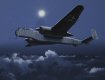
Manufacturer : Heinkel Production Began : 1942 Retired : 0 Number Built : 300 | He219 The He 219 had an auspicious combat debut. On the night of 11–12 June 1943, Werner Streib flew the V9 and shot down five bombers between 01:05 and 02:22 hours, before crashing on landing. Claims have been made that, "In the next ten days the three Heinkel He 219A-0 pre-production aircraft [shot] down a total of 20 RAF aircraft, including six of the previously "untouchable" de Havilland Mosquito fighter-bombers. Greatly encouraged, Kammhuber continued to press for immediate production."[15] No record of corresponding Mosquito losses or any documentary evidence exists that He 219 pilots claimed six Mosquitos The first major production series was the He 219 A-0, although initially the pre-production series, it matured into a long running production series, due to numerous changes incorporated into the design, along with the cancellation of several planned variants. Production problems as a result of Allied bombing in March meant the A-0 did not reach Luftwaffe units until October 1943. The A-0 was usually armed with two 20 mm MG 151/20 cannon in the wing roots and up to four 20 mm or 30 mm cannon in a ventral weapons bay. The first 10–15 aircraft were delivered with the 490 MHz UHF-band FuG 212 "Lichtenstein" C-1 radar with a 4 × 8-dipole element Matratze antenna array. 104 He 219 A-0s were built until the summer of 1944, the majority of them at EHW (Ernst Heinkel Wien) or Heinkel-Süd in Wien-Schwechat. The first planned version to reach production was the He 219 A-2 model, which had longer engine nacelles containing extra fuel tanks, unitized 1670 PS DB 603AA engines with higher critical altitude and often also two 30 mm (1.18 in) MK 108 cannon, as an offensive Schräge Musik upward-firing system in the rear fuselage. With Schräge Musik, the ventral weapons bay held two cannon due to space limitations.[21] The A-2 featured an updated, 90 MHz VHF-band Telefunken FuG 220 Lichtenstein SN-2 radar system, complete with its larger, high-drag 4 × 2-dipole element Hirschgeweih aerials. It initially had a longer minimum range than the C-1 radar, but had improved accuracy and resolution and was also less vulnerable to chaff jamming, through the late summer of 1944. A total of 85 He 219 A-2s were built until November 1944, most at EHR (Ernst Heinkel Rostock) or Heinkel-Nord in Rostock-Marienehe (now Rostock-Schmarl). The He 219 was a capable fighter aircraft and the pilots were free to hunt down any detected Allied bombers. Ground control sent the aircraft into the right area, where the pilots took over and guided themselves towards the bombers with the Lichtenstein VHF radar's information. The SN-2 radar's 4 km (3 mi) maximum detection range was greater than the distance between the bombers. While the performance of the A-2 was not extraordinary—approximately 580 km/h (360 mph) speed—it was enough of an advance over the Messerschmitt Bf 110Gs and Dornier Do 217Ns, for the crew to chase several bombers in a single sortie On the night of 11--12 June 1943, Werner Streib flew the The He 219 V9 and shot down five bombers.In the next 10 days the three Heinkel He 219A-0 pre-production aircraft would shoot down a total of 20 RAF aircraft, including six of the previously "untouchable" de Havilland Mosquito fighter-bombers. To improve its ability to intercept the Mosquito, the He 219 had excess weight removed. With some weapon and radio systems deleted, the aircraft was able to attain a speed of 650 km/h (400 mph). This version was given the designation A-6. None of these were produced, but similar weight saving measures could be done at the unit level. The last major production version was the A-7 with improved, unitized DB 603E engines. The A-7 typically had two 20 mm MG 151/20 cannon in the wing roots (inboard of the propeller arcs), two 20 mm MG 151/20 in the ventral weapons bay and two 30 mm (1.18 in) MK 108s as Schräge Musik. Production of 210 aircraft was to start November/December 1944, but the number produced is not known as original documents have been lost or contained no sub-version number. | |
| Squadrons for : Werner Streib | ||
| A list of all squadrons known to have been served with by Werner Streib. A profile page is available by clicking the squadron name. | ||
| Squadron | Info | |
NJG1 Country : Germany Click the name above to see prints featuring aircraft of NJG1 | NJG1 Full profile not yet available. | |
NJG2 Country : Germany Click the name above to see prints featuring aircraft of NJG2 | NJG2 I./NJG 2's initial role was unlike the other units of the Luftwaffe night fighter arm; as a Fernnachtjagd Gruppe they were tasked with long-range intruder missions over the UK, disrupting night flying training and harassing the returning Royal Air Force (RAF) bombers over their own airfields. Luftflotte 3's radio intercepts of Bomber Command's transmissions helped pinpoint the operational airfields in Eastern England. I./NJG 2 aircraft could then scramble to be over the airfields at the predicted times of the bomber's return. The technique employed was to mix with the returning bombers, orbit the bases, and either shoot down targets that presented themselves or drop 50 kilograms (110 lb) bombs across the runways Based at Gilze-Rijen in the Netherlands, operations commenced using just 7 JU 88 C-1 night fighters. Although most missions were carried out using the Junkers Ju 88C-1 and C-2, a few Dornier Do 215B-5 fighter conversions were trialled in the spring of 1941. The offensive over the UK yielded promising results- some 143 victory claims were made, and over 90 RAF aircraft were indeed lost between October 1940 and the start of 1942. There was also the additional disruption to RAF operations and the psychological effects on the RAF crews By October 1941 however night intruder sorties were curtailed, due to the inadequate number of aircraft available (I Gruppe never had more than 20 JU 88s operational) and the High Command's perceived lack of results; it was thought shooting down RAF bombers over the German homeland had a far greater morale effect than over the UK Among the most successful of the unit's pilots was Ufz. Heinz Strüning, who flew 66 intruder missions over England. He recorded his first night victory on 23/24 November - a RAF Vickers Wellington bomber and by the end of 1941 he had 9 victories. Leutnant Alfons Koster had, by October 1941, some 11 intruder victories. Lt. Hans Hahn was credited with 12 victories, all over England.[2] He was awarded the Knight's Cross of the Iron Cross In July 1941, but was killed in action in October 1941, colliding with an RAF Airspeed Oxford trainer he was trying to shoot down. II./NJG 2 flew more conventional operations at this time, based at Leeuwarden on the Dutch coast. In November 1941 4./NJG 2 moved to Catania, and would remain there until February 1942, when it transferred back to Leeuwarden and joined the rest of II./NJG 2. In November 1941 2./NJG 2 moved to Benghazi as part of Fliegerführer Afrika, and returned to Catania later in the month. The first 'kill' was claimed on 13 December, Obfw Sommer downing a Bristol Beaufighter over Crete. On 19 November 1941 the unit escorted Ju 88 bombers raiding shipping off Malta, Lt. Laufs shooting down a Hurricane of No. 126 Squadron. Early in 1942 both 2. and 3./NJG 2 was based at Benghazi until March 1942. Various demands for night cover meant from April onwards I./NJG 2 was scattered over the Mediterranean, with detachments based at Benina, Berca, Derna, Benghazi, El Quasaba and Crete. On 1 October, 7./NJG 2 was redesignated as 4./NJG 2. The unit's Leutnant Heinz Strüning was awarded the Knight's Cross of the Iron Cross on 29 October for 24 victories. One of this unit's Ju 88G-1 night fighters, from the 7th Staffel, with Geschwaderkennung style aircraft code 4R+UR, was landed at RAF Woodbridge by mistake on July 13, 1944, giving the Allies their first chance to examine a working example of the VHF-band Lichtenstein SN-2 airborne intercept radar, and Flensburg radar detector gear. This event resulted in a longer-wavelength deployment of Window to jam the SN-2 gear, and general removal of the Monica tail warning radar from all RAF Bomber Command heavy bombers By the end of the year NJG 2 were covering the night defence of the industrial Ruhr area, flying from Düsseldorf, Kassel, Gütersloh, and Köln. In the final weeks of the conflict, the unit began receiving the night fighter variant of the Junkers Ju 388 - thus making NJG 2 the first and only Luftwaffe detachment to use the nachtjager variant operationally. It is likely these machines were 388J-0 pre-production prototypes, as the 388 programme was cancelled before manufacture of the J-1 production series had begun. Given the haphazard and incomplete conditions of training in those final days of war, and the almost total depletion of aviation fuel stocks throughout what remained of the Reich, it is doubtful whether more than a handful of combat missions were flown by this new type. NJG 2 claimed approximately 800 air victories during its period of operations. | |
Return to Aviation Directory Search Home
|
Everything we obtain for this site is shown on the site, we do not have any more photos, crew lists or further information on any of the ships. COPYRIGHT NOTICE. ALL IMAGES DISPLAYED ON THIS WEBSITE ARE PROTECTED BY COPYRIGHT LAW, AND ARE OWNED BY CRANSTON FINE ARTS OR THEIR RESPECTIVE OWNERS. NO REPRODUCTION OR COPYING ALLOWED ON OTHER WEBSITES, BOOKS OR ARTICLES WITHOUT PRIOR AGREEMENT. |
|
Contact Details |
|
Sign Up To Our Newsletter!
This website is owned by Cranston Fine Arts. Torwood House, Torwoodhill Road, Rhu, Helensburgh, Scotland, G848LE Contact: Tel: (+44) (0) 1436 820269. Email: cranstonorders -at- outlook.com |
 |

