|
|
|
|
|
|

|
Naval History by Country :
|
|||||||||||||
| VIEW ALL OF OUR CURRENT ART SPECIAL OFFERS ON ONE PAGE HERE | |||
| NAVAL ART | AVIATION ART | MILITARY ART | SPORT ART |
|
|
Heinz Lange |
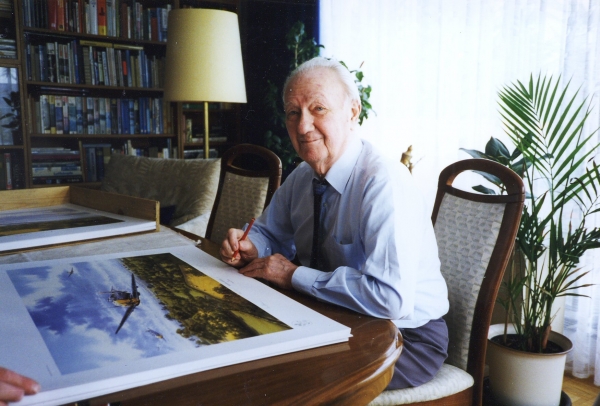 Heinz Lange Name : Heinz Lange Died : 26th February 2006 Air Victories : 70.00 Awards : Knights Cross |
At the outbreak of war Heinz Lange was with I./JG21 scoring his first victory in October 1939. He flew 76 missions in the Battle of Britain with 8./JG54, and never lost a wingman. After flying in the Balkan campaign he took part in the invasion of Russia, scoring 7 victories during the first week. In October 1941 he was given command of 1./JG54 and in 1942 command of 3./JG51. In January 1944 Heinz Lange returned to JG54 to command 1.Gruppe and then back to JG51 where he was appointed Kommodore of JG51 Molders, leading IV./JG51 at the same time. Heinz Lange flew over 628 missions and achieved 70 victories. He was awarded the Knight's Cross. Born 2nd October 1917, died 26th February 2006. |
Known Service Details : | |||||||
Squadron | Rank | Start of Service | End of Service | Known Dates | Aircraft | Airframes | Notes |
Leutnant | unknown | unknown | 30th October 1939 | ||||
unknown | unknown | ||||||
unknown | unknown | ||||||
Artwork signed by this Pilot or Aircrew |
  Clipped Signature - Heinz Lange. |   Fighter General by Graeme Lothian. |   Assault on the Capital by Robert Taylor |
  Mountain Wolf by Nicolas Trudgian |   Messerschmitt Country by Nicolas Trudgian (AP) |   Gathering Storm by Robert Taylor. |
Artwork featuring the mounted signature of this Pilot or Aircrew |
  Fw190A-4, Winter 1944 by Ivan Berryman. (B) |   Hans-Ekkehard Bob - No.2 by Ivan Berryman. (B) |   Breaking Cover by Robert Taylor. (C) |
Artwork with companion print(s) featuring the mounted signature of this Pilot or Aircrew |
  Evening Reflection by Richard Taylor. (B) |   Valiant Response by Robert Taylor. (C) |
Photos Submitted Through Our Directory |
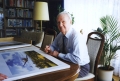 Heinz Lange Singing the art print Fighter General by Graeme Lothian. 25th October 1996. |  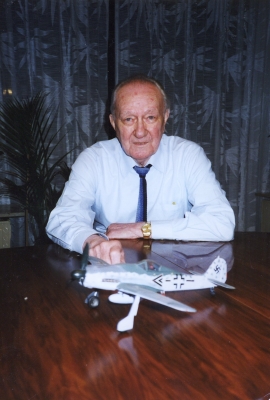 Heinz Lange With a model of his favourite aircraft. |
Known Victory Claims : | |||||||
Date | Rank | Squadron | Claimed | Location | Time | Aircraft Flown | Notes |
30/10/1939 | Ltn. | Gross-Bersen/Emsland | 12.5 | This was Blenheim L1415 Mk.I WV-? of No.18 Squadron. | |||
30/06/1941 | Oblt. | Dünaburg | 14.48 | ||||
30/06/1941 | Oblt. | Dünaburg | 14.53 | ||||
05/07/1941 | Oblt. | Ostrow | 12.3 | ||||
05/07/1941 | Oblt. | Ostrow | 12.32 | ||||
29/07/1941 | Oblt. | SB-3 | SSW Staraja-Russa | 15.45 | |||
02/08/1941 | Oblt. | I-18 | Ilmensee | 18.4 | |||
23/09/1941 | Oblt. | I-18 | Leningrad | 11 | |||
07/10/1941 | Oblt. | Oranienbaum | 16.4 | ||||
06/11/1941 | Oblt. | Tichwin | - | ||||
03/02/1942 | Oblt. | I-18 | - | 14.27 | |||
03/02/1942 | Oblt. | I-18 | - | 14.27 | |||
06/02/1942 | Oblt. | - | 14.1 | ||||
06/02/1942 | Oblt. | - | 14.1 | ||||
14/03/1942 | Oblt. | - | 16.17 | ||||
01/05/1942 | Oblt. | 19 28: 3500m | 16.27 | ||||
15/05/1942 | Oblt. | - | 10.51 | ||||
07/08/1942 | Oblt. | 20 522: 900m | 12.22 | ||||
07/08/1942 | Oblt. | 20 5223: 900m | 12.22 | ||||
23/08/1942 | Oblt. | 47 592: 50m | 9.27 | ||||
29/08/1942 | Oblt. | 10 142: 1700m | 7.02 | ||||
30/09/1942 | Oblt. | 00 264: 2100m | 10.27 | ||||
17/12/1942 | Oblt. | NE Syberplowka: 1200m | 13.44 | ||||
17/12/1942 | Oblt. | NE Syberplowka: 900m | 13.46 | ||||
07/01/1943 | Oblt. | 07 683: 600m | 8.01 | ||||
17/01/1943 | Oblt. | 07 754: 1800m | 11.15 | ||||
24/02/1943 | Hptm. | 54 283: 800m | 7.35 | ||||
11/05/1943 | Hptm. | 63 521: 1800m | 13.34 | ||||
28/05/1943 | Hptm. | 64 353: 1000m | 8.11 | ||||
10/06/1943 | Hptm. | 44 383: tiefflug | 19.28 | ||||
05/07/1943 | Hptm. | 63 613: 2500m | 15.55 | ||||
11/07/1943 | Hptm. | 63 611: 2200m | 17.27 | ||||
12/07/1943 | Hptm. | 63 239: 500m | 5.55 | ||||
12/07/1943 | Hptm. | 64 896: 700m | 6.02 | ||||
15/08/1943 | Hptm. | 51 846 [SE Bogoduchoff]: 800m | 13.29 | ||||
17/08/1943 | Hptm. | 41 631: 500m | 9.45 | ||||
18/08/1943 | Hptm. | 60 187: 600m | 7.41 | ||||
18/08/1943 | Hptm. | SSE Charkov: 3000m | 10.05 | ||||
26/08/1943 | Hptm. | W. Charkov: 500m | 15.1 | ||||
31/08/1943 | Hptm. | SE Yelnya: 2500m | 17.44 | ||||
31/08/1943 | Hptm. | 35 388: 2000m | 17.58 | ||||
05/09/1943 | Hptm. | N. Smolensk: 3800m | 6.25 | ||||
06/09/1943 | Hptm. | S. Yelnya: 3000m | 17.56 | ||||
06/09/1943 | Hptm. | W. Novgorod: 6000m | 15.37 | ||||
14/09/1943 | Hptm. | NW Yelnya: 1300m | 7.17 | ||||
20/09/1943 | Hptm. | SE Smolensk: 4000m | 15.3 | ||||
26/09/1943 | Hptm. | Smolensk: 5200m | 12.31 | ||||
21/10/1943 | Hptm. | Loyev: 4000m | 13.44 | ||||
22/10/1943 | Hptm. | 5km E. Loyev: 1200m | 12.01 | ||||
29/10/1943 | Hptm. | E. Dubrovno: 30m | 14.07 | ||||
01/01/1944 | Hptm. | S. Vitebsk: 200m | 13.57 | ||||
01/01/1944 | Hptm. | S. Vitebsk: 100m | 13.55 | ||||
01/01/1944 | Hptm. | S. Vitebsk: 200m | 13.57 | ||||
04/01/1944 | Hptm. | W. Vitebsk: 600m | 11.48 | ||||
04/01/1944 | Hptm. | W. Vitebsk: 300m | 11.57 | ||||
04/01/1944 | Hptm. | W. Vitebsk: 200m | 12 | ||||
06/01/1944 | Hptm. | 05 193: tiefflug | 9.59 | ||||
29/06/1944 | Hptm. | 95 748: 4000m | 10.12 | ||||
24/07/1944 | Hptm. | 21 845: 400m | 13.37 | ||||
31/07/1944 | Hptm. | 45 141: 600m | 11.48 | ||||
17/08/1944 | Hptm. | 36 346: 300m | 11.02 | ||||
29/08/1944 | Hptm. | 13 518: 1800m | 9.53 | ||||
05/09/1944 | Hptm. | 13 368: 1500m | 9.5 | ||||
07/10/1944 | Hptm. | 13 318: 2000m | 13.24 | ||||
07/10/1944 | Hptm. | 03 468: 3500m | 15.56 | ||||
07/10/1944 | Hptm. | 03 468: 3200m | 15.58 | ||||
10/10/1944 | Hptm. | 13 545: tiefflug | 15.25 | ||||
15/10/1944 | Hptm. | 13 573: 800m | 11.11 | ||||
15/10/1944 | Hptm. | 13 544: 400m | 11.44 | ||||
16/10/1944 | Hptm. | 13 179: 700m | 14.5 | ||||
| Aircraft for : Heinz Lange | ||
| A list of all aircraft associated with Heinz Lange. A profile page including a list of all art prints for the aircraft is available by clicking the aircraft name. | ||
| Aircraft | Info | |
Fw190 
Manufacturer : Fokke-Wulf Production Began : 1940 Retired : 1945 | Fw190 The Focke-Wulf 190 development project began in 1937. Conceived as a hedge against total dependence on the Messerchmitt 109, the 190 was designed by Kurt Tank utilizing a radial engine. This was against generally accepted design criteria in Germany, and many historians believe that the decision to produce a radial engine fighter was largely due to the limited manufacturing capacity for in-line, water-cooled engines which were widely used on all other Luftwaffe aircraft. Despite these concerns, Tanks design was brilliant, and the 190 would become one of the top fighter aircraft of WWII. The first prototype flew in mid-1939. The aircraft had excellent flying characteristics, a wonderful rate of acceleration, and was heavily armed. By late 1940 the new fighter was ordered into production. Nicknamed the butcher bird, by Luftwaffe pilots, early 190s were quite successful in the bomber interceptor role, but at this stage of the war many Allied bombing raids lacked fighter escort. As the war dragged on, Allied bombers were increasingly accompanied by fighters, including the very effective P-51 Mustang. The Allies learned from experience that the 190s performance fell off sharply at altitudes above 20,000 feet. As a result, most Allied bombing missions were shifted to higher altitudes when fighter opposition was likely. Kurt Tank had recognized this shortcoming and began working on a high-altitude version of the 190 utilizing an in-line, water-cooled engine. Utilizing a Jumo 12-cylinder engine rated at 1770-HP, and capable of 2,240-HP for short bursts with its methanol injection system, the 190D, or Long Nose or Dora as it was called, had a top speed of 426-MPH at 22,000 feet. Armament was improved with two fuselage and two wing mounted 20mm cannon. To accommodate the changes in power plants the Dora had a longer, more streamlined fuselage, with 24 inches added to the nose, and an additional 19 inches added aft of the cockpit to compensate for the altered center of gravity. By mid 1944 the Dora began to reach fighter squadrons in quantity. Although the aircraft had all the right attributes to serve admirably in the high altitude interceptor role, it was not generally focused on such missions. Instead many 190Ds were assigned to protect airfields where Me-262 jet fighters were based. This was due to the latter aircrafts extreme vulnerability to Allied attack during takeoff and landing. The 190Ds also played a major role in Operation Bodenplatte, the New Years Day raid in 1945 which destroyed approximately 500 Allied aircraft on the ground. The High Command was impressed with the 190Ds record on this raid, and ordered most future production of the Doras to be equipped as fighter-bombers. In retrospect this was a strategic error, and this capable aircraft was not fully utilized in the role for which it was intended. | |
| Squadrons for : Heinz Lange | ||
| A list of all squadrons known to have been served with by Heinz Lange. A profile page is available by clicking the squadron name. | ||
| Squadron | Info | |
JG21 Country : Germany Click the name above to see prints featuring aircraft of JG21 | JG21 Full profile not yet available. | |
JG51 Country : Germany Founded : August 1939 Click the name above to see prints featuring aircraft of JG51 | JG51 Jagdgeschwader 51 Mölders was a Luftwaffe fighter wing during World War II, named after the fighter ace Werner Mölders in 1942. JG 51's pilots won more Ritterkreuz des Eisernen Kreuzes than any other Jagdgeschwader, and flew combat from 1939 in all major theatres of war. Flying Bf 109s and then FW 190s, the wing claimed over 8,000 air victories. Experten included 'Toni' Hafner, Heinz Bär, Richard Leppla, Karl-Gottfried Nordmann, Günther Schack and the legendary Mölders. Formed in August 1939, and commanded by 48-year-old World War I ace Onkel Theo Osterkamp, the early months of the war JG 51 was based in the West, fighting in the French campaign, and in the Battle of Britain. From late June to mid July JG 51 was the only fighter Geschwader engaged against the RAF constantly. During the whole battle JG 51 lost 68 pilots, the highest casualty rate of the Luftwaffe fighter units engaged. JG 51 was one of the two Geschewader that had four Gruppen. The other being JG 1. Four Bf 109 of JG 51 in France 1940Whilst based out of the Belgian airfield at Mardyik in late 1940, the German ace Josef Pips Priller was a Staffelkapitän with JG 51, flying Bf 109-E Yellow One. Josef Priller went on to score over 100 victories, the third highest scoring Luftwaffe day fighter ace on the Western Front, fighting solely against the Western Allies. Against the Western Allies JG 51 had claimed 345 aircraft destroyed by May 1941. JG 51 were therefore one of the Jagdwaffe's elite units, with 'top ten' aces at this time including Werner Mölders with 68 claims, Walter Oesau with 34 claims, and Hermann-Friedrich Joppien with 31. Major Werner Mölders became unit Geschwaderkommodore during July 1940 and led the unit into the invasion of Russia in June 1941. Barbarossa (1941) Claiming 69 kills on the first day of the offensive, by 30 June 1941 JG 51 became the first fighter Geschwader to claim 1,000 air victories (113 kills in 157 sorties were claimed for the day). On 24 June JG 51 claimed 57 bombers shot down for the day. Mölders became the first fighter pilot to reach 100 claims in August and in the same month JG 51's Oberfeldwebel Heinz Bär reached 60 claims and was decorated with the Oak Leaves. A total of 500 Soviet claims was reached on 12 July 1941, although 6 pilots had been lost by JG 51 in the intervening 3 weeks since the offensive had started. After Mölders' departure in September 1941 (and death later that year) the Geschwader adopted his name as a title of honor in early 1942. Jagdgeschwader 51 Mölders was to remain on the centre sector of the Russian front throughout the rest of 1941. However Oberstleutnant Friedrich Beckh ( one of the few fighter pilots to wear spectacles) proved an uncharismatic commander after Mölders, and it was not until Major Karl-Gottfried Nordmann took over in April 1942 that a worthy successor to Mölders was found. In the period 22 June - 5 December 1941 the unit destroyed 1,881 Soviet aircraft, in return for 84 losses in aerial combat and a single aircraft on the ground. Air support for the Wehrmacht's Army Group Centre was entrusted to General Wolfram Freiherr von Richthofen's VIII. Fliegerkorps. In early January 1942, among the fighter units available to von Richthofen were II, III and IV/ JG 51. With the onset of the sub-zero conditions of the Russian winter, the majority of JG 51's available aircraft became grounded. The Russian winter counter offensive forced III./ JG 51 into flying numerous fighter-bomber operations in direct support of the infantry, and the gruppe filed few aerial 'kill' claims through January 1942. II./ JG 51 however, accounted for most of VIII. Fliegerkorps's aerial victories during the Soviet offensive. Particularly successful was the duo of Lt. Hans Strelow and Ofw. Wilhelm Mink, both of 5. JG 51. They claimed five MiG-3s of 16 IAP on 4 January (Mink claimed three) and 9 days later Mink claimed a Pe-2 and Strelow destroyed two R-Z biplanes for his 30th and 31st victories. On 4 February, Strelow increased his victories to 36 by shooting down four Russian aircraft. The 19 year-old Strelow claimed his 40th victory on 28 February and claimed 4 victories on both 6 March and 17 March. The next day he was awarded the Ritterkreuz des Eisernen Kreuzes and also shot down seven Soviet aircraft. He was awarded the Eichenlaub on 24 March, his claims total at 66. Normandy (1944) 7./JG 51, (with Bf 109G-6's) was attached to II./JG 1 in May 1944 from Brest-Litovsk, with pilots arriving at Störmede late in May and hurriedly converting to the FW-190. (It was later renamed 8./JG 1 on 15 August 1944 when the four-Staffeln Gruppe became standard) 7. Staffel was led by Ritterkreuzträger (Knight's Cross winner) Hptm. Karl-Heinz Weber with 136 confirmed kills. Its two other experten were Lt. Friedrich Krakowitzer (23 kills) and Ofhr. Günther Heckmann with 12 kills. 7./JG 51 joined II. Gruppe with 15 pilots on strength at the end of May, and during the first two months of the Normandy campaign the staffel was decimated, with twelve pilots killed, one POW and one severely wounded. As the war turned against Germany JG 51 was forced to operate closer and closer to Germany, finally staging out of East Prussia. | |
JG54 Country : Germany Click the name above to see prints featuring aircraft of JG54 | JG54 I./JG 54 was initially formed as I./JG 70 near Nuremberg in July 1939, just two short months before hostilities broke out. As was to become tradition within Grunherzgeschwader, the Gruppe took the Nurember coat-of-arms (a veritcally divided shield with a black heraldic bird on the left, and red and white diagonal stripes on the right) to represent the region the unit came from. On September 15, 1939, I./JG 70 was redesignated I./JG 54 The initial unit designation for II./JG 54 was I./JG 138. This unit was raised in 1938 after the Austrian annexation. Naturally many Austrian nationals were recruited when I./JG 138 was formed. The Aspern coat of arms (black lion's head surmounting a white cross on a red field) was taken by the Gruppe for its identity. I./JG 138 was briefly designated I./JG 76 before finally becoming II./JG 54 on April 6, 1940. The III./JG 54 has its roots in Prussia. Initially I./JG 21, the members were drawn from the Jesau region in Prussia. The modified Jesau coat-of-arms (a shield with a Jesau cross with three diving aircraft on a red background, with a white outline on the shield) was adopted as the Gruppe's own. On July 15, 1939, I./JG 21 was redesignated III./JG 54. However, the bureaucratic nature of the young Luftwaffe was such that it was over a year before records would reflect the new designation. Consequently, III./JG 54 fought in Poland and France as I./JG 21. Kommodoren of JG 54 : Major Martin Mettig; 2 Feb 40 to 25 Aug 40. Oberst Hannes Trautloft; 25 Aug 40 to 5 Jul 43. Major Hubertus von Bonin; 6 Jul 43 to 15 Dec 43. Oberstleutnant Anton Mader; 28 Jan 44 to Sep 44. Oberst Dieter Hrabak; 1 Oct 44 to 8 May 45. | |
Return to Aviation Directory Search Home
|
Everything we obtain for this site is shown on the site, we do not have any more photos, crew lists or further information on any of the ships. COPYRIGHT NOTICE. ALL IMAGES DISPLAYED ON THIS WEBSITE ARE PROTECTED BY COPYRIGHT LAW, AND ARE OWNED BY CRANSTON FINE ARTS OR THEIR RESPECTIVE OWNERS. NO REPRODUCTION OR COPYING ALLOWED ON OTHER WEBSITES, BOOKS OR ARTICLES WITHOUT PRIOR AGREEMENT. |
|
Contact Details |
|
Sign Up To Our Newsletter!
This website is owned by Cranston Fine Arts. Torwood House, Torwoodhill Road, Rhu, Helensburgh, Scotland, G848LE Contact: Tel: (+44) (0) 1436 820269. Email: cranstonorders -at- outlook.com |
 |

