|
|
|
|
|
|

|
Naval History by Country :
|
|||||||||||||
| VIEW ALL OF OUR CURRENT ART SPECIAL OFFERS ON ONE PAGE HERE | |||
| NAVAL ART | AVIATION ART | MILITARY ART | SPORT ART |
|
|
William Lucas |
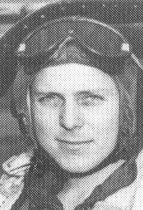 William Lucas Name : William Lucas Awards : Silver Star Distinguished Flying Cross (US) with 1 Bar |
After gaining his pilots wings in December 1943 he flew the F4U Corsair with VMF-216 in Guam and Kwajalein Atoll in the Marshall Islands before deploying to fight in the Battle of Okinawa. He later flew F4Us with VMF-224 in Korea, commanded the Marine Medium Helicopter Squadron 364 the Purple Foxes in Vietnam and was awarded the Silver Star and two DFCs. |
Known Service Details : | |||||||
Squadron | Rank | Start of Service | End of Service | Known Dates | Aircraft | Airframes | Notes |
unknown | unknown | 1945 | |||||
unknown | unknown | ||||||
Artwork signed by this Pilot or Aircrew |
  Okinawa by Robert Taylor. (AP) |
Photos Submitted Through Our Directory |
 William Lucas |
| Aircraft for : William Lucas | ||
| A list of all aircraft associated with William Lucas. A profile page including a list of all art prints for the aircraft is available by clicking the aircraft name. | ||
| Aircraft | Info | |
Corsair 
Manufacturer : Chance-Vought Production Began : 1940 Number Built : 12000 | Corsair The Chance-Vought F4U Corsair was arguably the finest naval aviation fighter of its era. Work on this design dates to 1938 and was headed-up by Voughts Chief Engineer, Rex Biesel. The initial prototype was powered by an 1800-HP Pratt & Whitney double Wasp radial engine. This was the third Vought aircraft to carry the Corsair name. The graceful and highly recognizable gull-wing design of the F4U permitted the aircraft to utilize a 13-foot, three-blade, Hamilton Standard propeller, while not having to lengthen the landing gear. Because of the rigors of carrier landings, this was a very important design consideration. Folding wings were also required for carrier operations. The F4U was thirty feet long, had a wingspan of 41 feet and an empty weight of approximately 7,500 pounds. Another interesting feature was the way the F4Us gear rotated 90 degrees, so it would lay flush within the wing when in the up position. In 1939 the Navy approved the design, and production commenced. The Corsair utilized a new spot welding process on its all aluminum fuselage, giving the aircraft very low drag. To reduce weight, fabric-covered outer wing sections and control surfaces were fitted. In May of 1940 the F4U made its maiden flight. Although a number of small bugs were discovered during early flight tests, the Corsair had exceptional performance characteristics. In October of 1940 the prototype F4U was clocked at 405-MPH in a speed test. The initial production Corsairs received an upgraded 2,000-HP radial giving the bird a top speed of about 425-MPH. The production models also differed from the prototype in having six, wing-mounted, 0.5 caliber machine guns. Another change was a shift of the cockpit about three feet further back in the fuselage. This latter change unfortunately made naval aviators wary of carrier landings with the F4U, due to its limited forward visibility during landings. Other concerns were expressed regarding a severe port wing drop at landing speeds and a tendency of the aircraft to bounce off a carrier deck. As a result, the F4U was initially limited to land-based USMC squadrons. Vought addressed several of these problems, and the Royal Navy deserves credit for perfecting an appropriate landing strategy for the F4U. They found that if the carrier pilot landed the F4U while making a sweeping left turn with the port wing down, that sufficient visibility was available to make a safe landing. With a kill ratio of 11 -to- 1 in WW 11 combat, the F4U proved superior in the air to almost every opposing aircraft it encountered. More than 12,000 F4Us were built and fortunately a few dozen remain in flyable condition to this date. | |
| Squadrons for : William Lucas | ||
| A list of all squadrons known to have been served with by William Lucas. A profile page is available by clicking the squadron name. | ||
| Squadron | Info | |
VMF-216 Country : US Click the name above to see prints featuring aircraft of VMF-216 | VMF-216 Full profile not yet available. | |
VMF-224 Country : US Click the name above to see prints featuring aircraft of VMF-224 | VMF-224 Full profile not yet available. | |
Return to Aviation Directory Search Home
|
Everything we obtain for this site is shown on the site, we do not have any more photos, crew lists or further information on any of the ships. COPYRIGHT NOTICE. ALL IMAGES DISPLAYED ON THIS WEBSITE ARE PROTECTED BY COPYRIGHT LAW, AND ARE OWNED BY CRANSTON FINE ARTS OR THEIR RESPECTIVE OWNERS. NO REPRODUCTION OR COPYING ALLOWED ON OTHER WEBSITES, BOOKS OR ARTICLES WITHOUT PRIOR AGREEMENT. |
|
Contact Details |
|
Sign Up To Our Newsletter!
This website is owned by Cranston Fine Arts. Torwood House, Torwoodhill Road, Rhu, Helensburgh, Scotland, G848LE Contact: Tel: (+44) (0) 1436 820269. Email: cranstonorders -at- outlook.com |
 |

